 |
|
 |
|
 |
|
Van Vechten was frequently asked to serve as a judge at drag balls that were a staple of gay life in
Harlem, specifically, and in all of New York, more generally. For more on
the intersection of white and black gay worlds during the first half of
the twentieth century, see GAY NEW YORK: GENDER, URBAN CULTURE, AND THE
MAKING OF THE GAY MALE WORLD, 1890-1940 by George Chauncey (Basic Books,
1994). Since the tragic death of his close friend James Weldon
Johnson [image] in 1938, Vechten had also been working to establish a memorial
collection of Negro Arts and Letters at Yale in Johnson's honor. His
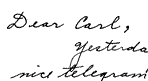
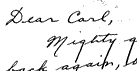
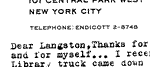
letter's to Hughes in the late 40s and 50s are filled with references to
the fascinating aspects of the collection as it grows. The same letters
reveal Van Vechten's growing frustrating that several contemporary black
writers and artists--knowing him only as the author of NIGGER
HEAVEN--refuse to participate in the collection. Click on the letter to listen to Emily Bernard's commentary. 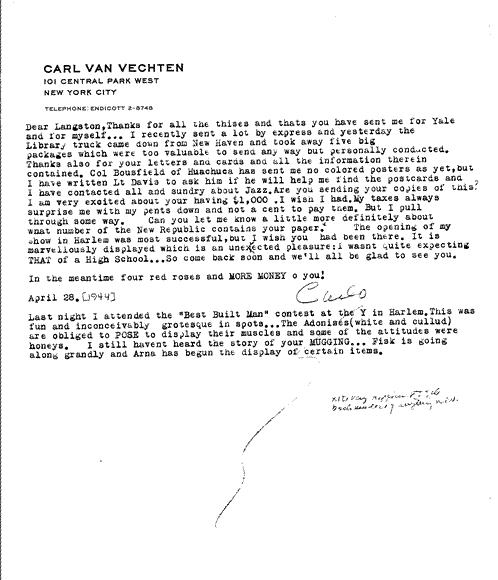
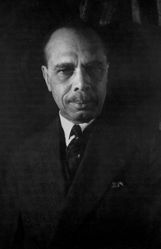
James Weldon Johnson
by Carl Van Vechten
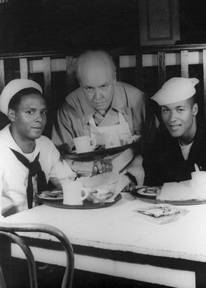
Van Vechten at the Stage Door Canteen, c.1943. Van Vechten was
devoted to the Canteen, the integrated entertainment center for enlisted
men. He never missed his regular Monday and Tuesday night busboy shifts
for three years. 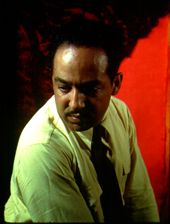
Langston Hughes |  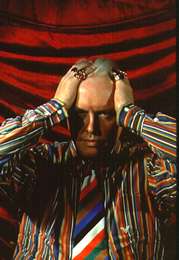
Carl Van Vechten |
-NEXT-




- Listen to a rich conversation between Emily and Judith Jones, who was Langston Hughes's last editor and who continues to work at Knopf -- Judith served as Emily's editor on this project as well. While you listen to the conversation (about 15 minutes in length), you can still move around the site, look at images and read excerpts and letters. This is a large file to download.
- Hear Emily read several of the letters from the book on Random House's Bold Type.
- Visit the Langston Hughes pages in the Knopf Poetry Center.
- Read an excerpt from Carl Van Vechten's contoversial novel, Nigger Heaven.
- Return to Emily Bernard's main desktop page.
|
|
|
|
|
|
|