
| • About the Novel |
| • About the Author |
| • Read An Excerpt |
| • Reading Groups |
|
|
 |
||
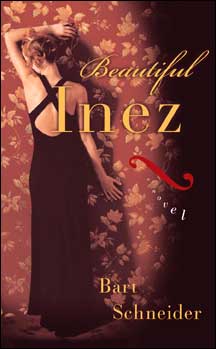  |
An Interview with the AuthorQ: Your father, David Schneider, played violin with the San Francisco Symphony Orchestra for 50 years. Can you tell us about how this personal connection helped you shape the novel and understand the character of Inez?
Unlike Inez, my father claims to have spent a very limited time practicing—it came so naturally to him that he didn’t feel compelled to over do it. As a teenager he played quartets with Isaac Stern who was the same age. He tells about going over to Isaac’s house shortly after getting into the symphony. Isaac’s mother said to her son, “Look at David, he’s already making money, and all you do is sit around all day and practice.” That was quite the joke, because everybody knew by the time he was a teen that Isaac was going to be a major international star. San Francisco in the twenties and thirties happened to be a breeding ground for young violinists and my dad is listed in some academic’s book about the phenomomen as a minor child prodigy. I always thought that was cool—a little dude who’d hardly practiced being dubed a minor cp. My father talked a lot about musician’s who trained to be virtuosos, and how many of them, unlike Isaac, were emotional dwarfs. His notion was that most of these people were undeveloped in some way because they’d become muscle bound from all their specialized training. He talked about musicians who’d trained to be soloists but ended up in symphony orchestras and felt that their talents and souls were being compromised by being nothing more than a section player. So I gave Inez the problems of a woman who stood on a spot practicing for six or seven hours a day, expecting to be a soloist, but ending up as a section player. That image of Inez as an exquisite race horse having to work hauling farm loads was central to my early understanding of her. While writing this novel, I spent a lot of time talking with my father about technical problems in the music. I had him walk me through the Paganini caprice and the Mendelsohn concerto. Recently while visiting my father, after he’d read the novel, he played the Kreisler piece for me that I have Inez play in Napa State Hospital during which all the inmates began crying. When my father was done playing, he said, “How come you’re not crying? You made all the people in the hospital cry. Is it really so sad a song?” I said, “Hey, it’s called poetic license, dad.” Q: Could you have set your novel in another era, in a different city, or is early 1960s San Francisco an essential setting for the story? A: I think of San Francisco as a character in this novel and earlier ones. The two things that ground me most in the writing are the physical landscape and the music. I am native to both and when I find myself faltering I try to direct myself back to the pure, primal, sensual feeling of either the sound and mood of the music or the the air and light of the city. I was eleven in 1962, when this novel is set, and I have an acute memory of that time. I had a lot of freedom as a kid and would often take the bus for a nickel from my house near the ocean to downtown. I was in love with all those stylish women parading around downtown doing their personal imitation of Jackie Kennedy, not that I knew at the time that that was what I was watching. I loved the theater of it, the energy of the downtown streets, the sense that everything had more consequence downtown than in my quiet neighborhood by the ocean. I think as a child I was very much of a serious watcher like Sylvia. I sensed that all those people walking around had some kind of terrible secrets and I wanted to know what they were. I’m very interested in the culture of the early sixties, that time just before the society was going to profoundly change. What was it like for a woman who had difficulty with her marriage, who had a career, but had no support in the world for being outside of the norm, feeling so at odds with what could only seem like her failure as a wife and mother. I approached Inez with such a keen sense of how much like an outsider she felt. This was far more important to me in understanding the deepest nature of the character than, say, her sexual relationship with another woman. That is something that happened to her, but the sense of failure and being an outsider was who she was. Inez would be a different woman in our time, with anti-depressents and a culture of support for her quandry. Q: Some of your readers may not realize that you've written about Jake Roseman before, in a novel that serves as a kind of sequel to Beautiful Inez. Tell us about Secret Love - do you recommend that readers of Beautiful Inez read Secret Loveas well, and does it matter which novel is read first? A: I think of these two novels as companion books, that can be read independently but which offer a richer experience if read in tandem. Two books that have been very important to me are Evan Connell’s Mrs. Bridges and Mr. Bridges, later made into a good film, The Bridges, with Paul Newman and Joanne Woodward. Connell’s world is the stifiling upper middle class of Kansas City in the thirties. Companion novels like Connell’s and mine allow readers a chance to know more about both the principal characters—having been inside their heads, and to a certain extent their bodies—than the married couples know about each other. With Secret Love, I wanted to explore the common male problem of grandiosity. In Jake Roseman I have a well meaning socially minded character who cannot live up to his own high minded values. I love those type of contradictions in a character because it gives him complexity and makes him very human. I tried to make Jake particularly charming in Secret Love so that readers had some difficulty reconciling his charm with his appaling behavior. Secret Love strikes me as a book that women read very differently than men. Women are quite a bit quicker about knowing a jerk when they see one, yet, nonetheless, many women are still susceptible to a questionable man’s charm. I was surprised when a male reviewer called Jake Roseman a mensch. I guess I have a different standard. Q: Describe your writing process a bit. Was writing Beautiful Inez different in any way than writing your other novels? A: I write early in the morning, about an hour and a half a day, before my family gets up. I spend about a year just generating raw material for a novel, allowing the characters to find out where they want to go and who they are. I mostly try to stay out of the way. I have learned to have great confidence in my imagination, which means I always expect I’ll have something to write if, as the poet William Stafford said, I’m willing to keep my standards low enough. I keep my standards very low in the first year or so because I know I’ll get a year or more of revising before the manuscript even goes to an editor. I see the imagination as a renewable resource, there is not a finite amount that I have to hurry to use up or I’ll lose. In fact, if I hurry and get anxious, I’ll lose it. I have learned to be patient and see my job as being very workmanlike and unglamorous, like my dad parcticing his fiddle a little bit every day. Q: Book groups are sure to have passionate discussions about Beautiful Inez. What issues, characters, and events do you anticipate will shape these discussions? Is there something in the novel you hope readers will consider, something you don't want them to miss? A: I’m sure readers will wonder about the approriateness of a male writer writing sointimately about women. I’ve come to see that all the characters in my novels represent a part of my personality, just as some people say all the characters in a nocturnal dream represent some aspect of the dreamer. I like to think I have this many variations to my personality and am still relatively sane. I try to understand the personalities of characters, male or female, straight or gay, black or white, by doing my best to understand their situations and the components of who make them what they are. It’s less a matter of writing a deliberate psychologial sketch or police report than allowing myself to be guided intuitively by the character’s reality and bringing as much sympathy as I can to understanding them. In many ways this book is about motherlessness. I grew up with a mother who had a very difficult time being a mother and I’ve come to understand the world as divided between people whose mother’s loved them unconditionally and those, like Inez and Sylvia and Joey and Anna and me, whose mother’s for one reason or another were unable to love them. That shared ache aligns me with great sympathy for these characters, even for a mother like Inez who ultimately betrays her children. Sylvia, of course, is my true love in this novel, her spirit I like to think is most like mine, at least mine as a surviving child. I fear that some readers will find Inez to be too chilly a character, but I tried to make her as genuine given her background and circumstances as I could. I feel great sympathy for her and her plight and I was glad to find a rich vein of soulfullness in her. I hope readers will not feel that the sex scenes are gratuitous. Rather than alluding to sex between the two women, I felt that I needed to earn the experience through the writing. Earn Inez’s arousal and and pleasure and transformation in particular. A male reader said to me, how did you manage to get the Lesbian sex so right? And I answered: how do you know I have? In the end, I let myself be guided by my understanding of sensual pleasure. As long as I didn’t stray to wear into mechanical descriptions of sex, I felt I could remian accurate to what is, above all, human about sexual pleasure. Food and music were also very helpful in this novel in giving sex a pair of rightful sensual companions. |
|
 |
||
Purchase Online: Amazon • Barnes & Noble • Books-A-Million • Powell's • WalMart |
 A: My father has always been a marvelous storyteller and he talked a
lot about his days growing up in San Francisco. He got into the S. F.
Symphony at eighteen. He auditioned as a fluke on the day before he was
going to New York to study with a great violin teacher in hopes of being
a soloist. I’ve always been fascinated with the notion of
that crossroads in which he chose unwittingly a long happy career in
the symphony. Didn’t he wonder about would have happened if he’d
gone off to NY to study more? I used to ask. “Not really,” he
said, “my temperment was right for the symphony.” Inez
Roseman makes the same choice, but her temperment wasn’t right. That
was one of my initial understandings about her.
A: My father has always been a marvelous storyteller and he talked a
lot about his days growing up in San Francisco. He got into the S. F.
Symphony at eighteen. He auditioned as a fluke on the day before he was
going to New York to study with a great violin teacher in hopes of being
a soloist. I’ve always been fascinated with the notion of
that crossroads in which he chose unwittingly a long happy career in
the symphony. Didn’t he wonder about would have happened if he’d
gone off to NY to study more? I used to ask. “Not really,” he
said, “my temperment was right for the symphony.” Inez
Roseman makes the same choice, but her temperment wasn’t right. That
was one of my initial understandings about her.