|
|
 |
|
|
|
 |
|
 |
|
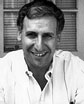
Edward Hirsch was born in Chicago in 1950 and educated at Grinnell College and the University of Pennsylvania. His first book of poems, For the Sleepwalkers (1981), received the Lavan Younger Poets Award from the Academy of American Poets and the Delmore Schwartz Memorial Award from New York University. His second book of poems, Wild Gratitude (1986), received the National Book Critics Circle Award. His third, The Night Parade (1989), and his fourth, Earthly Measures (1994), were both listed as notable books of the year by the New York Times Book Review. He writes frequently for leading magazines and periodicals--among them American Poetry Review, DoubleTake, where he is editorial advisor in poetry, and The Paris Review --and he has received a National Endowment for the Arts Fellowship, an Ingram Merrill Award, a Guggenheim Fellowship, and the Rome Prize from the American Academy and Institute of Arts and Letters. He teaches at the University of Houston.
Photo: Janet Landay
|
|
|
|
|

|
|
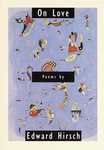
"Life has
to have the plenitude of art," Edward Hirsch affirms in his fifth volume
of poems, On Love, which further establishes him as a major
artist. From its opening epigraph by Thomas Hardy and an initiating
prayer for transformation, On Love takes up the subjects of
separateness and fusion, autonomy and blur. The initial progression of
fifteen shapely and passionate lyrics (including a sonnet about the poet
at seven, a villanelle about the loneliness of a pioneer woman on the
prairie, and an elegy for Amy Clampitt) opens out into a sequence of
meditations about love.
These arresting love poems are spoken by a
gallery of historical figures from Denis Diderot, Heinrich Heine,
Charles Baudelaire, and Ralph Waldo Emerson to Gertrude Stein, Federico
Garcia Lorca, Zora Neale Hurston, and Colette. Each anatomizes a
different aspect of eros in poems uttered by a chorus of historical
authorities that is also a lone lover's yearning voice. Personal,
literary, On Love offers the most formally adept and moving
poetry by the author Harold Bloom hails as utterly fresh, canonical, and
necessary.
In the Poet's Own Words
Secular love, sacred passion. Many of the poems in On Love meditate on what Keats calls "the holiness of the Heart's affections." These poems--some written in a version of my own voice, some speken by a gallery of historical figures--anatomize different aspects of eros. They take up the subject of human interconnectedness, of separation and fusion, autonomy and blur. "The Beloved and I are One," as the Sufi maxim has it. "We are creative creatures fuelled by passion," my Colette says. Sometimes that passion seems to drive us apart. Other times it brings us together as one.
|
|
|
|
|
|