CLICK IMAGES TO ENLARGE
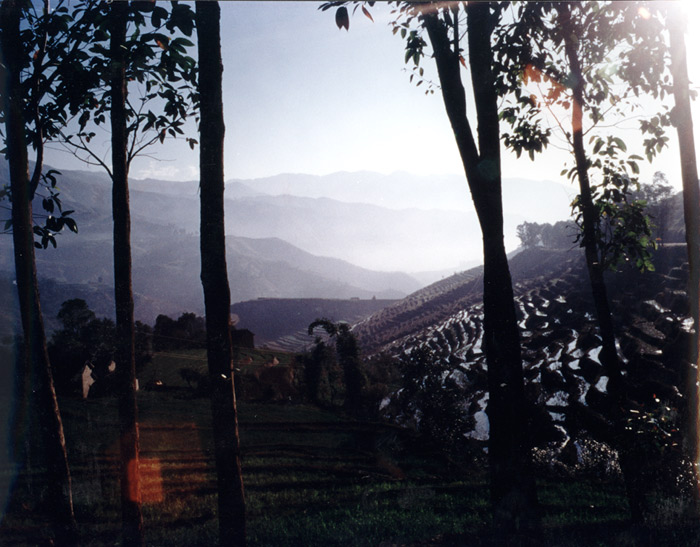
 4. On this journey, I defined the Mekong very broadly. At times I
ventured one or two hundred miles from the water itself to chase down
ideas or check on stories I had heard. In southern Yunnan, there are few
villages along the river itself, and it was often necessary to wander
off the river to find a place to stay. Early mornings here brought a
magical light. Off tiny rural roads, there were endless miles of
terraced paddies, and in the sun they invariably reminded me of those
ostentatious staircases in Busby Berkeley musicals down which sequinned
show girls pranced, a cultural reference that never quite made it into
translation in conversations with people I met there.
4. On this journey, I defined the Mekong very broadly. At times I
ventured one or two hundred miles from the water itself to chase down
ideas or check on stories I had heard. In southern Yunnan, there are few
villages along the river itself, and it was often necessary to wander
off the river to find a place to stay. Early mornings here brought a
magical light. Off tiny rural roads, there were endless miles of
terraced paddies, and in the sun they invariably reminded me of those
ostentatious staircases in Busby Berkeley musicals down which sequinned
show girls pranced, a cultural reference that never quite made it into
translation in conversations with people I met there.
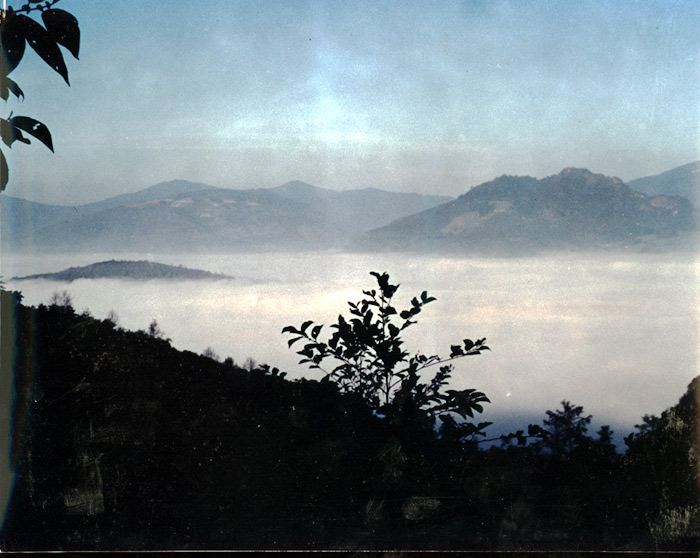
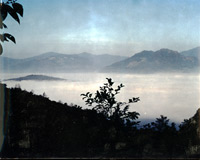 5. Southern Yunnan is quite mountainous, not in the Himalayan
sense, but dense with bulky hills through which only the occasional
narrow road winds, roads usually unpaved, but on occasion paved with
cobbles that are still laid by hand today in rural parts of China. One
morning driving through the hills in a dense misty fog the road surfaced
above the clouds and before me lay a white sea dotted with islands, the
tops of nearby hills. It was intensely quiet and totally empty, as if I
were stranded on some celestial island alone.
5. Southern Yunnan is quite mountainous, not in the Himalayan
sense, but dense with bulky hills through which only the occasional
narrow road winds, roads usually unpaved, but on occasion paved with
cobbles that are still laid by hand today in rural parts of China. One
morning driving through the hills in a dense misty fog the road surfaced
above the clouds and before me lay a white sea dotted with islands, the
tops of nearby hills. It was intensely quiet and totally empty, as if I
were stranded on some celestial island alone.
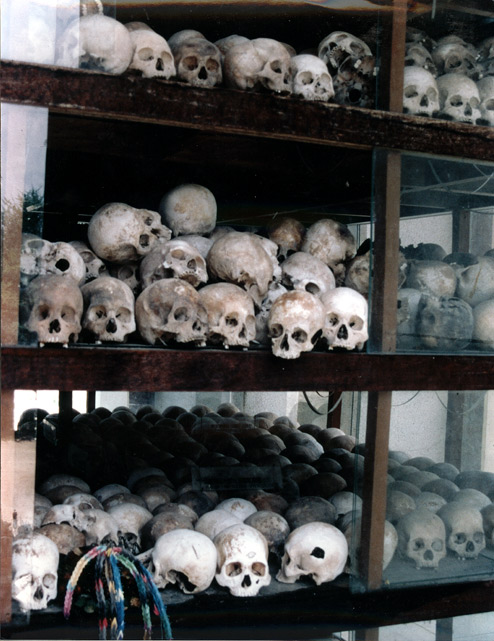
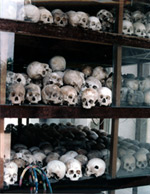 6.
For nearly four years, Cambodia was brutalized by the Khmer
Rouge, a regime that turned on its people, murdering nearly 2 million of
them before they were driven from power by the Vietnamese in 1979. In
the years that followed, endless killing fields were unearthed, places
where the Khmer Rouge had taken their victims and massacred them. In
Siem Riep, near the ancient temples of Angkor Wat and Angkor Thom, a bit
off the tourist roads, there is a small Buddhist monastery and in the
courtyard, a glass ossuary contained the skulls of Khmer Rouge victims
that were dug up from nearby mass graveyards. It was, as is much of
Cambodia, a terrifying memorial, a symbol of the horror through which
the country had gone, and perhaps a warning to the future.
6.
For nearly four years, Cambodia was brutalized by the Khmer
Rouge, a regime that turned on its people, murdering nearly 2 million of
them before they were driven from power by the Vietnamese in 1979. In
the years that followed, endless killing fields were unearthed, places
where the Khmer Rouge had taken their victims and massacred them. In
Siem Riep, near the ancient temples of Angkor Wat and Angkor Thom, a bit
off the tourist roads, there is a small Buddhist monastery and in the
courtyard, a glass ossuary contained the skulls of Khmer Rouge victims
that were dug up from nearby mass graveyards. It was, as is much of
Cambodia, a terrifying memorial, a symbol of the horror through which
the country had gone, and perhaps a warning to the future.
NEXT