CLICK IMAGES TO ENLARGE
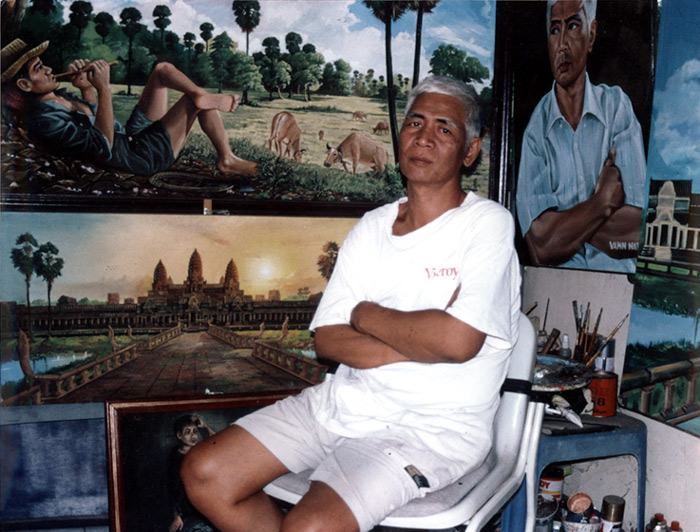
 7. I had heard about a painter named Vann Nath, a survivor of the
Khmer Rouge's most notorious interrogation and torture center, Tuol
Sleng. Vann Nath had been taken from his village to the torture center
and while he was there his inquisitors learned of his talent and put him
to work painting portraits of Pol Pot, the Khmer Rouge leader. When the
Vietnamese invaded Phnom Penh in 1979, his captors killed all but seven
of the remaining prisoners in Tuol Sleng and Vann Nath escaped in the
confusion. Today, he paints sporadically in a studio atop his family's
restaurant in Phnom Penh. A man who has seen the worst of inhumanities,
today he seems burdened by memory and sadness.
7. I had heard about a painter named Vann Nath, a survivor of the
Khmer Rouge's most notorious interrogation and torture center, Tuol
Sleng. Vann Nath had been taken from his village to the torture center
and while he was there his inquisitors learned of his talent and put him
to work painting portraits of Pol Pot, the Khmer Rouge leader. When the
Vietnamese invaded Phnom Penh in 1979, his captors killed all but seven
of the remaining prisoners in Tuol Sleng and Vann Nath escaped in the
confusion. Today, he paints sporadically in a studio atop his family's
restaurant in Phnom Penh. A man who has seen the worst of inhumanities,
today he seems burdened by memory and sadness.
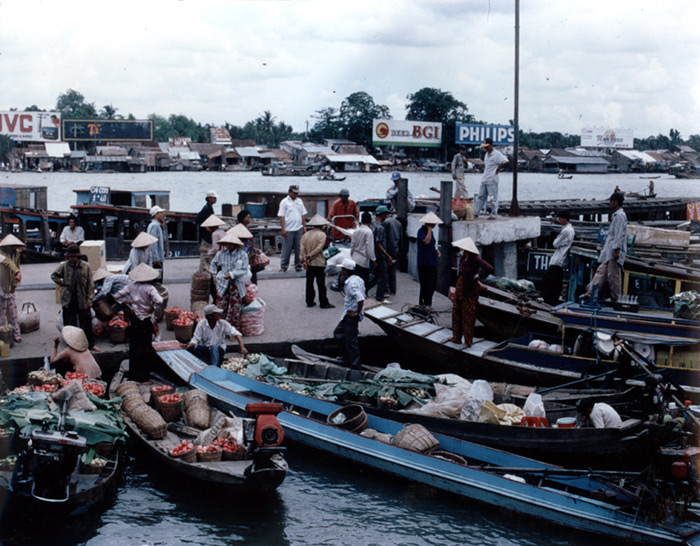
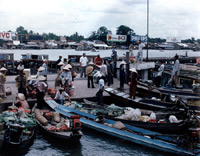 8. Deep in the Mekong Delta, Can Tho is the main commercial town.
Here people from villages throughout the Delta come to buy everything
from televisons to dragon fruit (Dragon fruit, for those who aren't
aquainted, is an reddish-orangey orb about the size of a large orange
with skin that has dozens of curling scale-like protuberances. the fruit
inside is white and shot through with zillions of black seeds. it's
positively yummy, a sort of tart sweetness, firm and refreshing in
thundering heat.). And farmers bring their produce to the floating
markets in narrow pirogues which they rope together along side new
concrete jetties. Almost all the traders are women and their boats carry
the Delta's abundance of fruit -- custard apples, longans, bananas,
oranges, durian -- and vegetables -- scallions, spinach, onions, garlic,
peppers. The freshness of the vegetables makes the Delta cuisine among
the best I have eaten. And though the government is building bridges and
roads, the dominant transport still remains the pirogues that wind
through the lacing Delta waterways.
8. Deep in the Mekong Delta, Can Tho is the main commercial town.
Here people from villages throughout the Delta come to buy everything
from televisons to dragon fruit (Dragon fruit, for those who aren't
aquainted, is an reddish-orangey orb about the size of a large orange
with skin that has dozens of curling scale-like protuberances. the fruit
inside is white and shot through with zillions of black seeds. it's
positively yummy, a sort of tart sweetness, firm and refreshing in
thundering heat.). And farmers bring their produce to the floating
markets in narrow pirogues which they rope together along side new
concrete jetties. Almost all the traders are women and their boats carry
the Delta's abundance of fruit -- custard apples, longans, bananas,
oranges, durian -- and vegetables -- scallions, spinach, onions, garlic,
peppers. The freshness of the vegetables makes the Delta cuisine among
the best I have eaten. And though the government is building bridges and
roads, the dominant transport still remains the pirogues that wind
through the lacing Delta waterways.
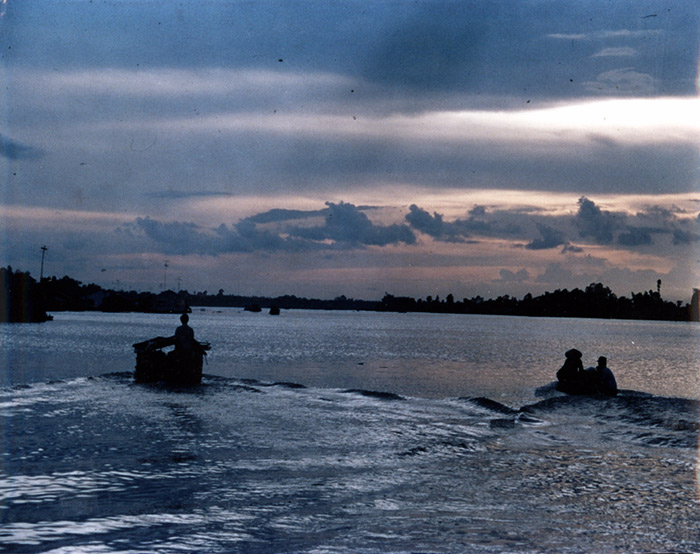
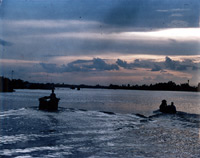 9. At the end of my voyage down the Mekong, I lingered in the Delta
for several days, to savor the end of a year-long adventure, to reflect
on what it all meant, to prolong the experience somewhat. In the
evenings I would sit, often with a freezing bottle of 333 beer, on a
dockside watching the pirogues head home, the lumbering big belly rice
boats make for the grain silos, flights of herons looking for evening
resting places. And the sun, dropping down into the waters, through the
fringe of banana and coconut trees, always stirred a frisson of endings
and new beginnings, a sense that this river had managed to bring me the
stories of people on the edges of change, of recovery, sometimes of hope
and sometimes not, of tales waiting to be told. The morning after this
picture was taken, I left the Delta for the last time and set out to
write down what I had learned.
9. At the end of my voyage down the Mekong, I lingered in the Delta
for several days, to savor the end of a year-long adventure, to reflect
on what it all meant, to prolong the experience somewhat. In the
evenings I would sit, often with a freezing bottle of 333 beer, on a
dockside watching the pirogues head home, the lumbering big belly rice
boats make for the grain silos, flights of herons looking for evening
resting places. And the sun, dropping down into the waters, through the
fringe of banana and coconut trees, always stirred a frisson of endings
and new beginnings, a sense that this river had managed to bring me the
stories of people on the edges of change, of recovery, sometimes of hope
and sometimes not, of tales waiting to be told. The morning after this
picture was taken, I left the Delta for the last time and set out to
write down what I had learned.