Books@Random Parents Teens@Random Kids@Random
Click Here to Return to Homepage  
Go to the advanced search page to search our catalog by grade.


Search our catalog across 133 themes and 10 holidays.

Sign up for the latest news!

Welcome everyone's favorite first-grader to your classroom!
Take your students on adventures with Jack and Annie!
Welcome Nate the Great, your new classmate!
Explore the world of science with Andrew Lost!

Learning to read, step by step!

Stepping StonesAll kinds of books, for every kind of kid.

Home > Librarians@Random > Author 411

December 2006 - Meg Rosoff

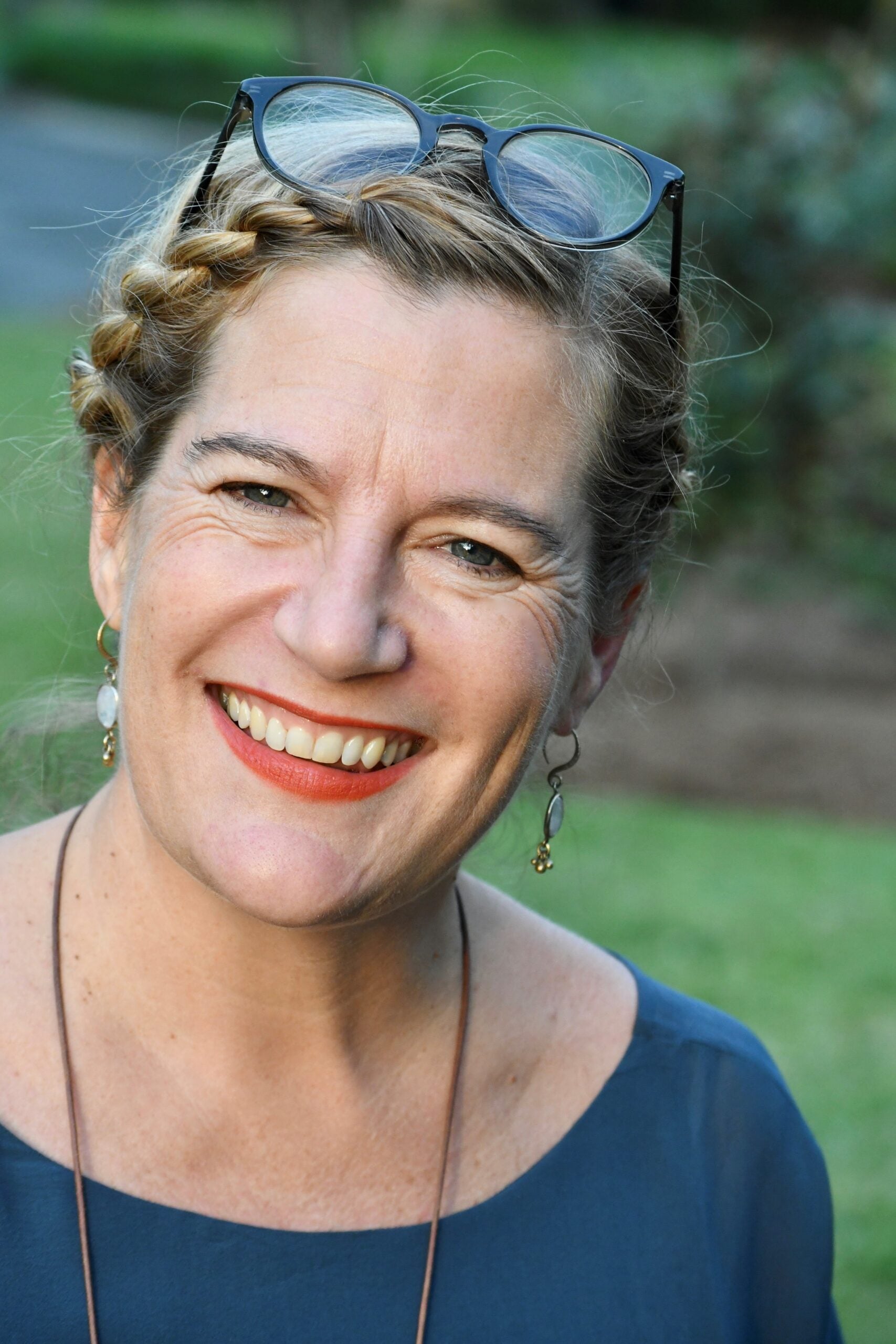
Meg Rosoff

Photo © 2004 Pete Millson

Just in Case

Just In Case

Meg Rosoff

Hardcover | Wendy Lamb Books | 978-0-385-74678-6 (0-385-74678-4) | August 2006 | $16.95 | Ages 14 up

Hardcover Library Binding | Wendy Lamb Books | 978-0-385-90909-9 (0-385-90909-8) | August 2006 | $18.99 | Ages 14 up

Justin Case is convinced fate has in for him.
And he's right.

After finding his younger brother teetering on the edge of his balcony, fifteen-year-old David Case realizes the fragility of life and senses impending doom. Without looking back, he changes his name to Justin and assumes a new identity, new clothing and new friends, and dares to fall in love with the seductive Agnes Day. With his imaginary dog, Boy, in tow, Justin struggles to fit into his new role and above all, to survive in a world where tragedy is around every corner. He's got to be prepared, just in case.

AUTHOR 411


Q. How were you able to get into the mind of a teenage boy? How did it feel to write from a perspective so distant from your own? Justin reminded one reader of Holden Caulfield. Are there any other characters in literature to whom you think Justin compares, or who inspired your creation of Justin?


A: I think I’m something of a chameleon at heart, because I don’t have any trouble getting into the brain of a teenage boy. Of course there are plenty of teenage boys I couldn’t begin to understand, but Justin isn’t exactly macho, or even particularly male. I’ve always thought of a long horizontal “gender line,” with really macho male men way over on the left, and really feminine, girly girls way over on the right. And because I was always a tomboy and never thought of myself as particularly girly, I imagine myself as fairly near the center of the line. So crossing over it and writing from a male point of view isn’t that hard for me. Though I don’t think I could get inside Arnold Schwarzenegger’s head!


I don’t know about another character in literature like Justin—there’s a lot of me in him, though I was never quite as loopy as he is. But I remember distinctly the feeling that I didn’t know exactly where the edges of reality were, not only when I was a teenager, but for many years afterwards, especially when it came to things like attraction and sexual relationships and how the world worked. The rules of the world seemed so unclear to me, and I wanted to write a book about a character who wasn’t sure where reality began and ended.


Q. Readers have debated whether Justin is seriously depressed, or if he is merely a victim of Fate’s exhausting games. Perhaps one condition led to the other. How did you intend for us to see Justin?


A: I was careful not to paint Justin as a psychopath, though some people do see him that way. At one point I asked my older sister (who’s a shrink) to read the rough draft and tell me whether she thought he sounded too crazy (she said no). Justin is depressed, but he’s not crazy. In other words, he’s a teenager, not a schizophrenic, and he has a tendency to see the dark underside of life a lot more clearly than the cheerful side. This makes him much more susceptible to Fate’s games. I remember years ago having a friend who was very depressed, and he said to me, “I see the world much more accurately than nondepressed people do, it’s just that it’s not a very productive way of looking at life.” And of course, he was right in many ways. Justin has a moment early in the book in which it suddenly occurs to him how dangerous life really is, how many truly awful things could happen, how vulnerable he is. And though his response to that realization is somewhat extreme, he is in fact right . Life is dangerous and terrifying and full of loss and tragedy, and most of us manage to get through it and stay cheerful by pretending it will all turn out alright. That makes me sound like a real pessimist, but I’m not. I do believe that terrible sadness is part of life, and in the end, we all die, so there are no permanent happy endings. But like Charlie, I also think “something nice might happen” along the way.


Q: The format of Just in Case—notably the inclusion of Fate’s commentary—is quite unique. (This novel certainly demands close reading!) Why did you choose to present the story in this way? Some readers suggest that the complicated, back-and-forth format serves to play games on readers, just as Fate plays games on Justin. How would you respond?


A: The readers who suggested that the back-and-forth format was a reflection of Fate’s game-playing with Justin can go to the head of the class! One of my editors asked me (before the book was published) whether Fate was all in Justin’s head, or whether he was a real external character, and my answer was “Yes.” In other words, both. I’m very interested in what I call “the edges of reality”—the places where fact and fantasy meet. They’re the places that things like superstitious behavior emerge from, or a belief in luck, or religion. I don’t believe that Fate as a character controls our lives, but you won’t catch me walking under a ladder, either.


Q: We’re glad Justin has Peter as a friend throughout his whole ordeal. How come Peter believes Justin so easily? Justin’s relationship with Agnes, on the other hand, is a bit rockier. How did you come up with her character?

A: I had an idea when I started the book that I wanted to surround Justin with people who just naturally were able to see the world more clearly than he did. Even his dog and his baby brother understand more about how the world works. Dorothea says at one point: “Don’t apologize—you don’t choose to be this way.” She knows he has a very complicated and pessimistic world view, but she doesn’t blame him or dislike him for it. The affection and tolerance of his friends is one of the things that saves him. I’ve been asked how Peter can see Justin’s invisible dog, but doesn’t real friendship often involve a powerful shared world view? I remember sitting in a theater once where everyone was hysterical laughing, and my friend and I sat there stony-faced. We felt like Martians, like we were the only two people who didn’t think the joke was funny.

As for Agnes, she’s simple—I consciously wanted to create a relationship that was
wrong, but without actually blaming either party. Most bad relationships in books or films rely on one of the partners being a villain. But Agnes isn’t a villain, her intentions with Justin are good, they’re just wrong! I suppose that’s why she can’t see his dog. She doesn’t share his vision of the world the way Dorothea and Peter and Charlie do.


Q: To what extent did you intend for readers to take the “metaphysical” components of Just in Case seriously? For instance, is Charlie truly brilliant and psychic, or is he just a figment of Justin’s imagination?

A: Ah . . . that’s the wonderful thing about fiction. The writer doesn’t take a photograph of the real world, he/she is making up stories. I have occasionally met a very tiny baby who strikes me as weirdly wise and possibly thinking very deep thoughts. But what’s important about Charlie is that even as a baby, he can make more sense of the world than Justin can. He says “Duck” and someone hands him a duck. Justin would stare at a duck for hours, and then say “Pizza” and wonder why no one understood what he wanted. So whether Charlie is a genius or not, he has something very important to teach Justin.


Q: Justin’s imaginary dog, Boy, is fascinating. How did you come up with the idea for Boy? Why is it that some people can see Boy, while others are oblivious?

A: Boy just leapt into my head (like a greyhound!) one day, though I suspect he’s based on the imaginary dogs and horses I had as a child. I loved animals so much and wanted a dog or a horse so badly, that I made them up, and they seemed very real to me. I don’t know why he had to be a greyhound, as I’ve never known a greyhound in real life, but he just did. Characters are like that sometimes, they wander into your story and you get stuck with them.

In the book, the people who can see Boy are the people who have managed to tune into Justin’s wavelength, who have understanding and sympathy for the way he views the world, who are open to a wide variety of experiences and are not so black and white themselves.


As an aside, I fell so in love with the character of Boy, that I bought two part greyhound puppies. And you’ll be astonished to hear that they are not wise and serene, at least not when they’re eating their way through all the shoes and furniture in the house. (But I do love them madly.)


Q: What is Dorothea’s purpose in the book? It’s interesting how she adamantly defends “Nature’s way” in Chapter 37. How is she related to Fate?

A: Dorothea is the anti-sentimentalist in the book. She accepts events and people for what they are and isn’t shocked by them. I’m not sure how she’s related to Fate, but don’t you get the feeling that Fate wouldn’t dream of messing with Dorothea? I don’t thinks she’d make a good plaything, she’s too strong and self-possessed.


Q: How did you choose the ending for Just in Case? Was it something you envisioned from the beginning, or did it evolve as your writing progressed?

A: From the very beginning, I knew I wanted Justin to have to fight a real one-on-one, life-and-death battle with Fate at the end, to decide who was stronger. I wanted Justin to have to choose to live, despite his understanding of the risks. And he does.


Q: In the book, Fate has a lot of control over what the characters do and say. As the author of the book, you have similar control over what the characters do and say. Did you see yourself as Fate in the lives of these characters?

A: That’s a wonderful question, and it surprises me greatly to say that for me, the answer is no. Once I create characters, I almost feel as if they have a life of their own, and I’m just responsible for writing down their story. I never feel as if I’m manipulating them, though of course I am. The process of writing feels much more like trying to find out what their story is, and reporting it accurately and compellingly. Weird, but true.


Q: Why did you choose to give Fate a voice? At the very beginning of Just in Case, Fate discloses that he/she is “up here.” Where are you referring to? Do you believe in fate? Do you think fate is as conniving as you represent it in Just in Case?


A: I don’t believe in fate, per se, but I do believe that life is a minefield—and if you add a little bit of depression and a little bit of paranoia to the mix, you can start to believe that someone or something is planning your downfall. Giving Fate a voice just snapped that “force” into focus, so that it no longer felt random, but controlled. When my youngest sister was very ill with cancer, I noticed that my family (who had always been very rational) became very superstitious, and I thought, “Aha!” Depression drives people to look for reasons, and to look for ways to control the outcome (see also: religion). My middle sister also had cancer, and she said at one point that every time she picked up a penny off the street, she “believed” it gave her an extra week of life. Now, she knew rationally that this wasn’t true, but she did it nonetheless. And so did we all. My whole family was picking pennies up for awhile.
As for “up here,” I wasn’t thinking of heaven, but a kind of Google-earth perspective on humanity—enough height to give an overview that humans usually lack.


Q: What inspired you to write Just in Case? How and where do you do your best writing? What types of books do you like to read most? Who are some of your favorite authors?


A: I’ve always been a little bit obsessed by the idea of “what if?”—the times you turn left instead of right and it changes your whole life. When my daughter was a baby, I turned around to lock the front door and she went down the steps in her stroller and slammed face down on the sidewalk, and though she was fine in the end, I was depressed for months afterwards, thinking that in that one moment of inattention I could have killed her. I heard an interview with a woman years ago, whose son fell off a roof and died and she said that for the next 50 years she relived that moment over and over, if only she’d reached out a few seconds earlier. And what about the guy who went out drinking the night before 9/11 and overslept the next morning and didn’t get to work on time, and it saved his life? In moments like that, fate feels like a very strong presence.

I do my best writing in a little house I bought with a friend on the beach in Suffolk. There’s no television, radio, telephone, or Internet there, and occasionally I run away and leave my family and just make a fire and take the dogs and work 12 hours a day. It’s bliss. The rest of the time I’m like any other urban mother—I get my daughter to school, clear off the kitchen table, make the beds, answer the e-mails, talk to my husband, walk the dogs, and try to work in-between! It can be frustrating, but ideas all come out of the richness of life.

I’m a very promiscuous reader—I love to read about 19th- and early-20th-century explorers and travel writers (Isabella Bird, Wilfred Thesiger, Thor Heyerdahl), mid-20th century Virago fiction—written by women, usually about domestic life (Elizabeth Taylor, Rosalind Lehmann, Molly Keane)—and I’m not very good at nonfiction or biography, despite being obsessively interested in people. When I was a teenager I read Hemingway, Dostoevsky, Ian Fleming, and now I love being surprised with quirky stories—I adored Andrey Kurkov’s Death of a Penguin—but then I really like Alice Munroe and Philip Roth who both write about “ordinary life.” Oh, and good graphic novels—Art Spiegelman’s
Maus is amazing. As for teen books, a few of my favorites this year are Siobhan Dowd’s A Swift Pure Cry, and Frances Hardinge’s Fly by Night. And Andreas Steinhoefel’s The Centre of the World. Doesn’t narrow it down much, does it?


Q: Finally, one of the participating book groups attends a school with an active speech team. Is there one passage, in particular, from Just in Case that you think would be enhanced by a live dramatic interpretation?


A: Well, a bit of dialogue might help . . . maybe Chapter 28 or 33—two encounters between Agnes and Justin during which he tries to explain his panic to her and she tries to reassure him. I like them because they give an idea of how two people experiencing the same event can view it in such totally different ways.


Thanks to the following Teen Book Groups for participating!

Beech Grove High School Book Group

Beech Grove, Indiana

Cypress Creek High School Bears Book Club

Orlando, Florida

St. Monica School Teen Zone Book Club

Mercer Island, Washington