| |
 |
"Food is our common ground, a universal experience."—James Beard
|
 |
| |
 |
 |
|
 |
THE GIFT OF SOUTHERN COOKING |
 |
|
 |
|
| |
| |
|
|
| |
| |
4 pork chops cut from the loin, 1/2inch thick, brined for 2 hours (see note) 4 tablespoons lard or unsalted butter, or a mixture of both
Salt and freshly ground black pepper
12 ounces fresh cranberries, rinsed and picked over
3/4 cup granulated sugar
Serves 4
|
|
Baked Pork Chops with Cranberries
A simple, flavorful supper dish that Miss Lewis used to make at Café Nicholson in the 1940s. Layer pork chops and sugared cranberries in a casserole and bake—the tart berries tenderize the meat and render a delicious sauce. It's a good way to prepare chicken too.
Preheat the oven to 350°F.
Rinse and dry the pork chops with paper towels. Heat the lard or butter in a heavy sauté pan until quite hot. Brown the pork chops on each side in the hot fat. Remove from the pan, and season well on each side with salt and pepper.
Put a third of the cranberries in the bottom of a small baking dish that will hold the pork chops in two layers. Sprinkle 1/4cup of the sugar over the cranberries. Lay two of the pork chops side by side on top of the sugared cranberries. Top with half of the remaining cranberries, and sprinkle another 1/4cup of sugar over all. Top with the two remaining pork chops, the same as before, and the remaining cranberries and sugar. Place a piece of parchment directly on top of the cranberries, and a piece of foil directly on top of the parchment. Cover the baking dish with a tight-fitting lid, or wrap with a double thickness of foil to seal tightly.
Bake in the preheated oven for about 1 hour, until pork chops are tender. Taste the cooked cranberries carefully, and add a little salt and black pepper if needed. Serve the pork chops hot with the cranberry sauce spooned over.
Note on Brining for Poultry and Meat
Brining poultry or pork—that is, soaking it in a saltwater solution before cooking—serves a twofold purpose: it helps the flesh retain moisture and seasons it all the way through. To make the brine, stir kosher salt into cold water until dissolved, in the proportion of 1/4 cup salt to 1 quart of water. (Don't use table salt in this formula, by the way; it will be too salty.) Mix enough brine to cover the poultry or meat completely in a (nonreactive bowl) or pot. Store refrigerated for the times specified below:
Cut-up chicken (Country Captain, Smothered Chicken, Fried Chicken): brine for 8-12 hours
Whole chicken for roasting: brine for 8-24 hours (after 24 hours, the chicken can become too salty)
Whole turkey for roasting: brine for 24-48 hours
Pork chops: brine for 2 hours
Pork loin: brine for 8-24 hours
Pork shoulder: brine for 24 hours
|
|
|
| |
| |
1 1/2 cups fine-ground white cornmeal
1 teaspoon salt
1 teaspoon Homemade Baking Powder (see note)
1 3/4 cups soured milk or buttermilk
2 eggs, lightly beaten
2 tablespoons unsalted butter
Serves 6-8
|
|
Our Favorite Sour Milk Cornbread
Sour-milk cornbread is one of those quintessential foods of the South for which there are hundreds of recipes (and infinite variations). Although we'd never claim to have the "definitive version, Miss Lewis and I worked together on this recipe until we got just what we wanted: an all-cornmeal bread that's light, moist, and rich, full of corn flavor, with the tanginess of sour milk or buttermilk. Like all Southern cornbreads, it has no sugar—that's a Yankee thing.
Traditionally, milk that had started to culture was used in cornbread and other baked goods, both for its pleasant sharp taste and for a leavening boost (its acids react with baking soda to generate carbon dioxide). Since modern pasteurized milk doesn't sour nicely—it just goes bad—we use commercial buttermilk here instead.
This is a genuine all-purpose cornbread, delicious as a savory bread or even as a dessert, slathered with butter and honey. My mother and grandmother only made this kind of leavened cornbread (which they called "egg bread") for cornbread stuffing, and it does make superb stuffing. It's also delicious in a time-honored Southern snack: cornbread crumbled into a bowl with cold milk or buttermilk poured over. Many Southerners—especially of an older generation—would call that a perfect light supper on a hot summer day, after a big midday meal.
Preheat the oven to 450°
Mix the cornmeal, salt, and baking powder together in a bowl. Stir the milk into the beaten eggs, and pour over the dry ingredients in batches, stirring vigorously to make a smooth glossy batter.
Cut the butter into pieces and put it in a 10-inch cast-iron skillet or baking pan. Put the skillet in the preheated oven, and heat until the butter is melted and foaming. Remove from the oven, and swirl the butter all around the skillet to coat the bottom and sides thoroughly. Pour the remaining melted butter into the cornbread batter, and stir well until the butter is absorbed into the batter. Turn the batter into the heated skillet, and put in the oven to bake for 30-40 minutes, until cornbread is golden brown and crusty on top and pulls away from the sides of the skillet.
Remove the skillet from the oven, and turn the cornbread out onto a plate. Allow to cool for 5 minutes before cutting into wedges. Serve the cornbread while it is hot.
Note on Homemade Baking Powder
Distressed by the chemical additives and aftertaste of commercial "double-acting" powders, Miss Lewis years ago started making her own baking powder—a traditional mixture of cream of tartar and baking soda. When I first used her formula (from her books, before we met), I couldn't really taste any difference. Soon, though, I realized that muffins and quick breads made with aluminum-sulfate-based powders left a metallic "tingle" on my tongue. Today, I make up a batch of this powder every week for use at the restaurant and bring a jar home for Miss Lewis. We recommend it for all the recipes here. If necessary, you can substitute commercial baking powder in equal amounts.
Sift 1/4 cup cream of tartar with 2 tablespoons baking soda together 3 times, and transfer to a clean, tight-sealing jar. Store at room temperature, away from sunlight, for up to 6 weeks.
|
|
|
| |
| |
2 cups apple-cider vinegar
2 cups granulated sugar
1 1/2 pounds tart cooking apples (Winesap or Granny Smith), peeled and cut into 1/2-inch pieces
3 tablespoons freshly squeezed lemon juice
10 large cloves garlic, peeled
About 3 inches fresh ginger, peeled and coarsely chopped
1 1/2 tablespoons salt
6 dried chili peppers
1 1/2 cups raisins
2 tablespoons yellow mustard seeds
Makes 2 1/2 Pints
|
|
Apple Chutney
Miss Lewis made this chutney at Café Nicholson, where it was a favorite of India's ambassador to the United Nations, Madame Pandit—sister of the legendary Indian leader Jawaharlal Nehru. Serve this with Country Captain (pages 96-97) as well as roast pork and game dishes. You can substitute pears, peaches, or green tomatoes for the apples.
Put the vinegar and sugar in a large nonreactive saucepan or Dutch oven. Bring to a boil over high heat, stirring until the sugar is dissolved. Reduce the heat and simmer for 10 minutes. Toss the apples and lemon juice in a large bowl. Put the garlic, ginger, salt, and dried chilis in a food processor, and blend until finely chopped.
Add the apples, garlic mixture, raisins, and mustard seeds to the vinegar-sugar mixture, and simmer, stirring often, until the apples are tender and the chutney has thickened, about 45 minutes.
Spoon the hot chutney into sterilized canning jars, and seal following manufacturer's directions. Or simply put in jars and refrigerate.

Edna Lewis at Café Nicholson
Excerpted from THE GIFT OF SOUTHERN COOKING by Edna Lewis and Scott Peacock Copyright 2003 by Edna Lewis and Scott Peacock. Excerpted by permission of Knopf, a division of Random House LLC. All rights reserved. No part of this excerpt may be reproduced or reprinted without permission in writing from the publisher.
|
|
----------------------------------------------------------------------
You received this newsletter because you have subscribed to our mailing list.
To unsubscribe, send a blank message to unsub_knopfrecipes@info.randomhouse.com
If you received this newsletter as a forward and wish to subscribe, send a blank message to sub_knopfrecipes@info.randomhouse.com
|
|






 IN THIS ISSUE
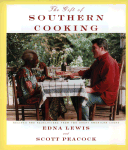
 America lost a culinary legend last week. Edna Lewis was the author of the landmark cookbook The Taste of Country Cooking and co-author of the recent, amazing The Gift of Southern Cooking with Scott Peacock.