Time of the Turtle King
Get ready for an adventure with turtles on the Galapagos islands.
LEARN MORE






Time of the Turtle King
The #1 bestselling Magic Tree House series is ready to whisk you away across the world with Jack and Annie–this time as World Turtle Experts!
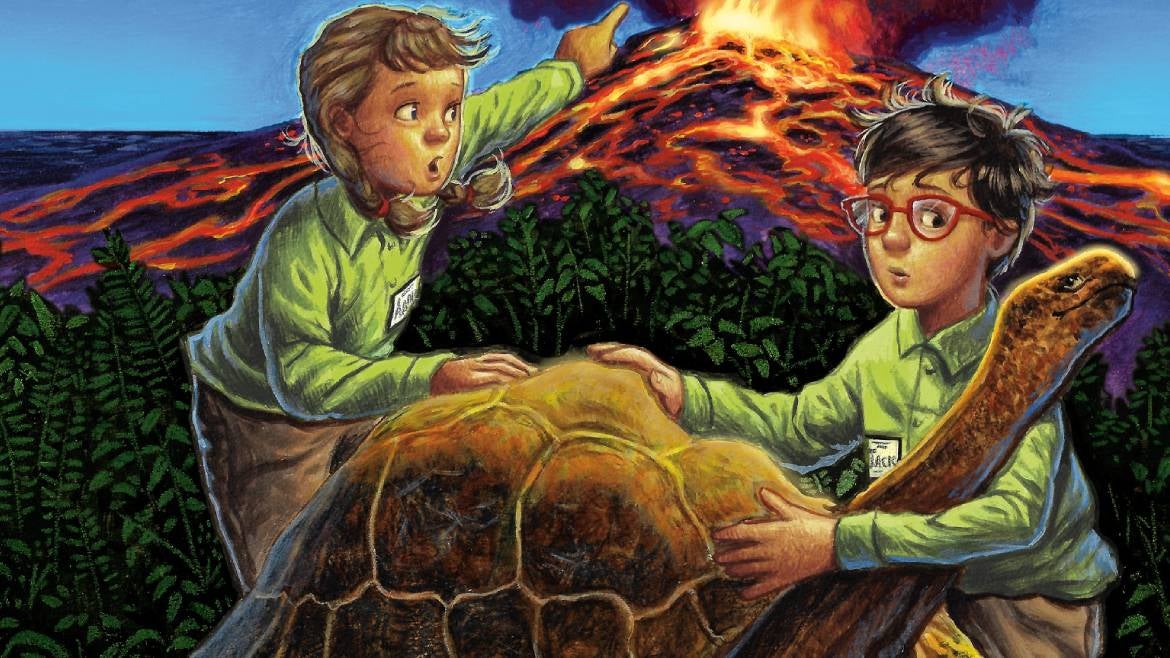
It’s just a regular day when ordinary kids Jack and Annie are whisked away in the magic tree house to the Galapagos islands, where they must save a giant tortoise from an erupting volcano! But what do Jack and Annie know about saving turtles?! Plenty, thanks to some magic that makes them experts. A helicopter ride, rushing lava, and a whole lot of determination make this one adventure Jack and Annie will never forget!
Did you know that there’s a Magic Tree House book for every kid?
Magic Tree House: Perfect for readers who are just beginning chapter books
Merlin Missions: More challenging adventures for the experienced reader
Fact Trackers: Nonfiction companions to your favorite Magic Tree House adventures
Graphic Novels: Relive the original adventures brought to life with art by Kelly & Nichole Matthews
If you’re looking for Merlin Mission #38: Monday with a Mad Genius, it was renumbered as Merlin Mission #10 when the series was rebranded in 2017.
Time of the Turtle King
The #1 bestselling Magic Tree House series is ready to whisk you away across the world with Jack and Annie–this time as World Turtle Experts!
It’s just a regular day when ordinary kids Jack and Annie are whisked away in the magic tree house to the Galapagos islands, where they must save a giant tortoise from an erupting volcano! But what do Jack and Annie know about saving turtles?! Plenty, thanks to some magic that makes them experts. A helicopter ride, rushing lava, and a whole lot of determination make this one adventure Jack and Annie will never forget!
Did you know that there’s a Magic Tree House book for every kid?
Magic Tree House: Perfect for readers who are just beginning chapter books
Merlin Missions: More challenging adventures for the experienced reader
Fact Trackers: Nonfiction companions to your favorite Magic Tree House adventures
Graphic Novels: Relive the original adventures brought to life with art by Kelly & Nichole Matthews
If you’re looking for Merlin Mission #38: Monday with a Mad Genius, it was renumbered as Merlin Mission #10 when the series was rebranded in 2017.