
|
 |

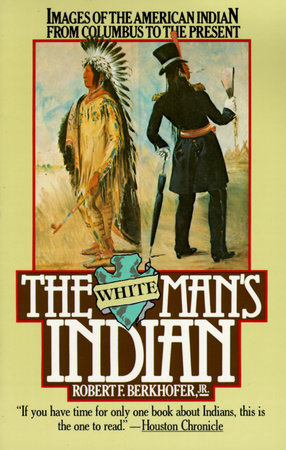
Columbus called them "Indians" because his geography was faulty. That name and, more importantly, the images it has come to suggest have endured for five centuries, not only obscuring the true identity of the original Americans but serving as an ideological weapon in their subjugation. Berkhofer's account illustrates the self-serving stereotypes Europeans and white Americans have concocted about the "Indian": Noble Savage or bloodthirsty redskin, he was deemed inferior in the light of western, Christian civilization and manipulated for the benefit of his oppressor.
"A splendid inquiry into, and analysis of, the process whereby white adventurers and the white middle class fabricated the Indian to their own advantage."--Chronicle of Higher Education
"A compelling a definitive history...of racist preconceptions in white behavior toward native Americans."--Leo Marx, The New York Times Book Review
Table of Contents
Part One: The Idea of the Indian: Invention and Perpetuation The Spanish Legacy of Name and Imagery French and English Terms and Images Significance of Indians as a General Category of Conception Persisting Fundamental Images and Themes
Part Two: From Religion to Anthropology: The Genealogy of the Scientific Image of the Indian Christian Cosmogony and the Problem of Indian Origins Environmentalism and the Varieties of the Human Species in Enlightenment Thought The Idea of Progress and the State of Savagery in the History of Mankind Evolutionism and Primitive Peoples in 19th Century Anthropology "Scientific" Racism and Human Diversity in 19th Century Social Sciences Cultural Anthropology and the Modern Conception of Indians
Part Three: Imagery in Literature, Art, and Philosophy: The Indian in White Imagination and Ideology European Primitivism, the Noble Savage, and the American Indian Puritanism, the Wilderness, and Savagery as Divine Metaphors The Indian and the Rise of an American Art and Literature The Western and the Indian in Popular Culture From Racial Stereotype to "Realism" in the Literary Indian
Part Four: Imagery and White Policy: The Indian as Justification and Rationale The Colonial Foundations of White Indian Policy: Theory The Colonial Foundations of White Indian Policy: Practice Early United States Policy: Expansion with Honor Expansion with Honor: Problems in Practice Democracy, American Liberalism, and Indian Policy in the 19th Century Democracy and Removal: Defining the Status of the Indian Reservations and Allotment: Acculturation and Detribalization A New Deal for Native Americans: Cultural Pluralism in Practice The Modern Period: Historic Reversal or Reversion?
Epilogue
|
 |