the author


Ask Markus a Question


Markus Zusak is available for speaking engagements through the Random House Speakers Bureau. Visit www.rhspeakers.com for more information.

Australian author Markus Zusak grew up hearing stories about Nazi Germany, about the bombing of Munich and about Jews being marched through his mother’s small, German town. He always knew it was a story he wanted to tell.

“We have these images of the straight-marching lines of boys and the ‘Heil Hitlers’ and this idea that everyone in Germany was in it together. But there still were rebellious children and people who didn’t follow the rules and people who hid Jews and other people in their houses. So there’s another side to Nazi Germany,” said Zusak in an interview with The Sydney Morning Herald.

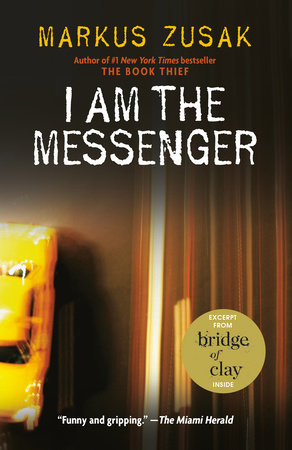
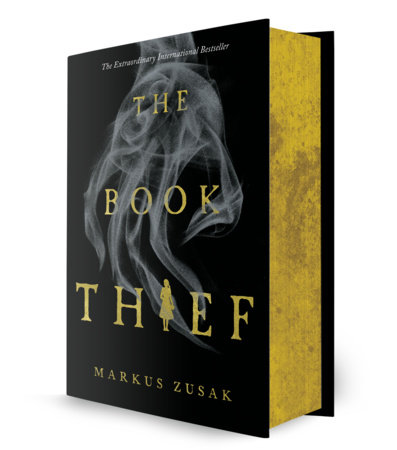
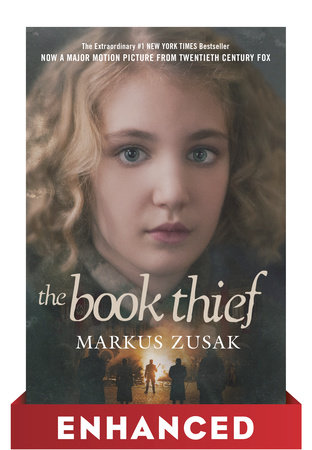
At the age of 30, Zusak has already asserted himself as one of today’s most innovative and poetic novelists. With the publication of The Book Thief, he is now being dubbed a ‘literary phenomenon’ by Australian and U.S. critics. Zusak is the award-winning author of four previous books for young adults: The Underdog, Fighting Ruben Wolfe, Getting the Girl, and I Am the Messenger, recipient of a 2006 Printz Honor for excellence in young adult literature. He lives in Sydney.


    Click on a question to read Markus's answer.

How did you become a writer?
Do you follow a set routine when you write?
What was your inspiration for writing The Book Thief
How did you come to write I Am The Messenger?
What do you do to get away from writing?
Lastly, where do you get your ideas from?

How did you become a writer?

When I was growing up, I wanted to be a house painter like my father, but I was always screwing up when I went to work with him. I had a talent for knocking over paint and painting myself into corners. I also realized fairly quickly that painting bored me. When I was a teenager, I read some books that brought me totally into their worlds. One was The Old Man and the Sea and another was What’s Eating Gilbert Grape. I was also inspired by S.E Hinton’s novels — The Outsiders at the start, but as time went on, more so by Rumble Fish. When I read those books, I thought, That’s what I want to do with my life. After many rejection letters, it took seven years to get published, and there were countless daily failures along they way as well. I’m glad those failures and rejections happened, though, because they made me realize that what I was writing just wasn’t good enough — I had to push myself to improve.

Do you follow a set routine when you write?

I’m a believer in routines. I like to wake up knowing what I’m going to do in a day’s work, and that starts by knowing when I start and when I might finish. I also like to have the room right, the desk right — everything — and that starts the night before. I want to turn up and know that I’m prepared.

The only time the routines really change is at the start or end of a book, when I’m more likely to work later at night. I can’t face starting a book very early in the morning, purely because self-belief levels are at their lowest for me when I wake up. When I’m finishing a book, I will stay up longer and work through the night, mainly out of desperation to finally get it done.

What was your inspiration for writing The Book Thief?

The Book Thief was supposed to be a small book - only a hundred pages or so. When I was growing up, I heard stories at home about Munich and Vienna in war-time, when my parents were children. Two stories my mother told affected me a lot. The first was about Munich being bombed, and how the sky was on fire, how everything was red. The second was about something else she saw.

One day, there was a terrible noise coming from the main street of town, and when she ran to see it, she saw that Jewish people and other so-called criminals were being marched to Dachau. At the back of the line, there was an old man, totally emaciated, who couldn't keep up. When a teenage boy saw this, he ran inside and brought the man a piece of bread. The man fell to his knees and kissed the boy's ankles and thanked him… Soon, a soldier noticed and walked over. He tore the bread from the man's hands and whipped him for taking it. Then he chased the boy and whipped him for giving him the bread. In that one moment, there was great kindness and great cruelty, and I saw it as the perfect story of how humans are.

When I remembered those stories, I wanted to build them into a small book, like I said. The result was The Book Thief — a much bigger book — and it came to mean everything to me. No matter what anyone ever says about that book, whether good or bad, I know it was the best I could do, and I don't think a writer can ask for more of himself than that.

How did you come to write I Am The Messenger?

I was sitting in a park one night eating fish and chips and saw a bank with a fifteen minute parking zone out the front. I thought, Fifteen minutes, that’s not very long — every time I go the bank it takes a lot longer than that. I then thought, What if you were in that bank when it was being robbed and your car was out in the fifteen minute parking zone? How would you get out to move your car to avoid getting a fine? That gave me the bungled bank robbery scene that led to everything else in the book.

What do you do to get away from writing?

I live near the beach, and a great park. If I’m not at either of those places with our kids or dogs, I’m just at home, in the backyard. Or doing the dishes. I’ll also just be reading as well. After all, that’s why I wanted to be a writer in the first place.

Lastly, where do you get your ideas from?

I used to lie about this, but now I actually know — I started writing when I was sixteen. I’m well into my thirties now. I get my ideas from twenty years of thinking about it.

Copyright © 2009 Random House, Inc. All rights reserved. Privacy Policy.