Random House: Bringing You the Best in Fiction, Nonfiction, and Children's Books
Authors
Books
Features
Newletters and Alerts

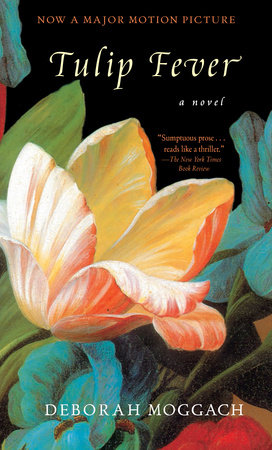
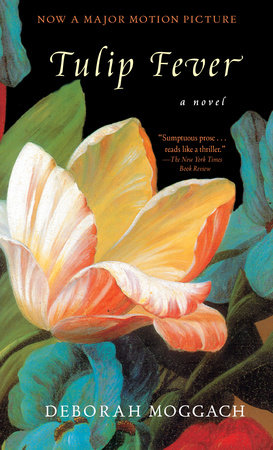
Tulip Fever

Written by Deborah MoggachAuthor Alerts:  Random House will alert you to new works by Deborah Moggach

Tulip Fever Enlarge View
Upgrade to the Flash 9 viewer for enhanced content, including the ability to browse and search through your favorite titles
  • Category: Fiction
  • Format: Trade Paperback, 288 pages
  • On Sale: April 10, 2001
  • Price: $14.00
  • ISBN: 978-0-385-33492-1 (0-385-33492-3)
Tulip Fever
Written by Deborah Moggach
Format: Trade Paperback
ISBN: 9780385334921
Our Price: $14.00
 Quantity: 1 
Buy From a Local Store

Also available as an eBook.

ABOUT THIS GUIDE

The questions, discussion topics, and author biography that follow are intended to enhance your reading of Deborah Moggach's Tulip Fever.

ABOUT THIS BOOK

In 1630s Amsterdam, tulip fever has seized the populace. Everywhere men are seduced by the fantastic exotic flower. But for wealthy merchant Cornelis Sandvoort, it is his young and beautiful wife, Sophia, who stirs his soul. She is the prize he desires, the woman he hopes will bring him the joy that not even his considerable fortune can buy.

Cornelis yearns for an heir, but so far he and Sophia have failed to produce one. In a bid for immortality, he commissions a portrait of them both by the talented young painter Jan van Loos. But as Van Loos begins to capture Sophia's likeness on canvas, a slow passion begins to burn between the beautiful young wife and the talented artist. As the portrait unfolds, so a slow dance is begun among the household's inhabitants. Ambitions, desires, and dreams breed a grand deception -- and as the lies multiply, events move toward a thrilling and tragic climax.

In this richly imagined international bestseller, Deborah Moggach deftly brings to life a world of art, beauty, lust, greed, deception -- and tulips.

Reader's Guide

1. What is tulip fever?

2. Tulips, flowers, and petals play a far greater role in the story than as simply a trading commodity. How? Why?

3. "Turn the paintings round and enjoy their beauty, for they shall outlast us all," writes Cornelis in his final note. How is this ironic?

4. In the 1630s, Amsterdam society was very hierarchical. Why is it that the lower class characters triumph in their goals and happiness? Do they want something so different from what the upper class protagonists want?

5. Jan tells his apprentice that "all painting is deception," and yet when painting "Naked Woman on a Bed" he tells Sophia that, "this painting will not lie, it will tell the truth." Ultimately which is true? How are the paintings in the book truthful or deceptive?

6. A water motif runs throughout the book. What is its significance? Why do you think the author chose to include it so prominently?

7. Cornelis, so proud and admiring of his city of Amsterdam, is the only one to leave it behind. Why?

8. Which proves more seductive: love or tulips? Which proves more destructive?

9. Religion and belief are present throughout the book. In the end, although all the characters have sinned, one (Sophia) turns to the church and one (Cornelis) turns away from it entirely. Why? Does Sophia make her decision based entirely on self-preservation or is there more to it?

10. Does Maria's belief in superstition suit her and guide her better than the others' practice of organized religion?

11. If, as it seems at its most simplistic, the novel shows us that "the wicked shall be punished," why do Maria and Willem end up the way they do?

12. If Willem had confronted Maria rather than joining the Navy, what options might have been open to Sophia and Jan? Did, in essence, Willem cause everyone's downfall?

13. Do you think Sophia and Jan did the right thing in planning to indulge their love rather than their obligations? Could they have been successful if circumstances had been different?

14. How does author seem to feel about parental love versus romantic love? Cornelis is deprived of both kinds -- twice, which impacts him more?

15. Does Maria's belief in superstition suit her and guide her better than the others' practice of organized religion?

16. If, as it seems at its most simplistic, the novel shows us that "the wicked shall be punished," why do Maria and Willem end up the way they do?

17. If Willem had confronted Maria rather than joining the Navy, what options might have been open to Sophia and Jan? Did, in essence, Willem cause everyone's downfall?

18. Do you think Sophia and Jan did the right thing in planning to indulge their love rather than their obligations? Could they have been successful if circumstances had been different?

19. How does author seem to feel about parental love versus romantic love? Cornelis is deprived of both kinds -- twice. Which impacts him more?

ABOUT THE AUTHOR

Deborah Moggach is the author of twelve previous novels. She lives in London.

  • bookmark, share, and shelve:
  • Add to Good Reads
  • Add to Librarything
  • Add to Living Social
  • Add to Shelfari
  • Add to WeRead
  • (?)
PRINT THIS PAGE EMAIL THIS PAGE