Author Q&A
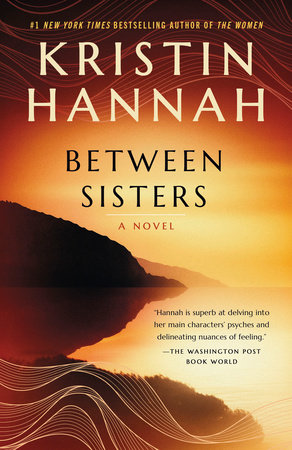
Random House Reader’s Circle: This is the first time Between Sisters has been released as a trade paperback and as a Random House Reader’s Circle novel. How does it feel to return to this earlier novel of yours?
Kristin Hannah: It was actually a surprising and interesting endeavor, to look back on my own past. I imagined that it would be like looking at old photographs in a yearbook–you know what I mean. Where you look at your younger self and wonder what on earth you were thinking to choose that hairstyle. As a child of the disco era, I have a lot of those pictures gathering dust somewhere. Anyway, when I first realized that I’d have to reread the novel (which is something I never do), I was nervous. But the truth is that I was able to read the book as a pure reader, with no red pen in hand, and it was a lot of fun. I fell in love with the characters all over again. I can honestly say that I adore so many of the characters in this book. Meghann, Claire, Joe, the Bluesers . . . it’s a fun group of people who inhabit this world.
RHRC: Readers originally met the lead character, Meghann Dontess, in your novel Distant Shores. What made you decide to write her story? Did you already have a story in mind for her when you were writing Distant Shores?
KH: I have now written eighteen novels, and Meghann Dontess is the only character to date who has ever appeared as a secondary character and demanded her own story. In the beginning, she was a relatively unimportant character–the heroine’s best friend, who showed up for a few margarita nights–but by the time I finished her first scene, I knew I wanted to find out more about her. From her first line of dialogue, she was funny, sarcastic, angry, and deeply damaged. In short, I loved her and wanted to know more. By the time I finished Distant Shores, I was already imagining what Meghann’s life would be like. That was the start of Between Sisters.
RHRC: Your novels are very much about emotional ties and relationships between people. In this book, you highlight the bond between sisters–what compelled you to tell this story about two estranged sisters?
KH: In retrospect, I can see how important a book like Between Sisters was for me. At the time, it seemed that I was doing what I always do–following an idea that compels me. But in fact, Between Sisters was a career changing choice. It was the first time I’d written a novel that focused primarily on women. Sure, there are men in the story–and women who fall in love–but the heart of this story is the relationship between two women. And once I’d opened that door, it changed the course of my career and my ideas. In the years since, I have gone on to write about all the facets of women’s lives.
RHRC: Your characters are so true-to-life and well drawn. What’s your process for creating characters? Do you start with a few characteristics and then let them evolve as the story progresses or do you already have a “model” for each character? Do you base them on people in your real life?
KH: I am often asked if I base characters on the people in my own life, and I take this as a real compliment. Hopefully it means my characters are so full of life that readers believe they must be drawn from reality. The truth is that more often than not, my characters are wholly imaginary. I have never consciously modeled a character after anyone I know. That being said, I will reveal that most of the characters I create are somehow a part of me. In Between Sisters, Meghann comes from my obsessive, controlling, frightened side; Claire springs from my caring, relaxed, at-home-mom side. So in a way, it can be said that this book is a metaphorical melding of my own personality traits. This is true in much of my work. My characters are often working through issues that touch upon my own life. This is why so many of my female characters grapple with the early, painful loss of a mother. It’s my own form of therapy. In this novel, the mother is absent, but the effect is the same: growing up without a mother leaves a mark on a woman.
As to my process for creating characters, it is all about layering. I begin with a broad idea of what a character needs to be to make the plot/premise work. It’s almost an archtype. And then, draft by draft, I add defining characteristics and back story, until, hopefully, I’ve created a fully animated imaginary person. If I’ve done my job, the reader will believe that my characters can truly “walk right off the page” and sit down for coffee.
RHRC: Do any of your characters ever surprise you?
KH: I am not one of those authors who loses control throughout the writing of the book. I am almost entirely the puppet master in the creation of characters. Thus, it is rare that my characters do things that surprise me. What does happen, however, is I find that occasionally a character will not do what I need them to do. That means a redo of the plot. When I hit a wall like that, I know that something critical is wrong earlier; that I haven’t created the right motivation for a given action. What does surprise me on occasion is how much I like a character, or how pleased I am with the end result. A few of my favorite characters–Izzy from On Mystic Lake, Alice from Magic Hour, Tully from Firefly Lane, and Anya from Winter Garden.
RHRC: As a mother yourself, was it difficult for you to write about a mother who abandoned her children? How did you feel when you were writing about Ellie?
KH: It’s clear from my body of work that motherhood is a huge thing for me. There’s no doubt that I identify primarily as a mother. Like all women, I am many other things as well–writer, wife, girlfriend, daughter, sister– but motherhood is the very core of who I am. So, yes, it was difficult to write about a woman who was so cavalier about her responsibilities, and therefore, so cruel. Obviously, the effect on her children was devastating. It’s clear that Meghann’s personality was shaped and wounded by the abandonment; it is the reason she cannot really believe in love and why she’s so angry. She really uses sex to keep love at bay, and she doesn’t see how much this choice is hurting her.
Between Sisters is definitely a sisters’ book first and foremost, but it’s also about motherhood. Claire has worked hard to become the kind of mother she never had. And that’s important to me; to point out that cycles of abuse can be stopped; that love can change the dynamic of a family. In the end, I felt that Ellie was a tragic character, who was probably profoundly wounded herself.
RHRC: You have a knack of making readers feel what your characters are feeling. I had to fight back tears reading some of your more emotional scenes. Do you ever feel emotionally raw after writing a scene? Have you ever cried while writing a scene?
KH: Thank you so much for that nice compliment. It used to worry me that readers so often were moved to tears while reading my novels, but I’ve come to realize that all of us need a good cry now and then. I work very hard at creating characters that you know well enough to care about.
I know there are many writers who are so moved by their own work that they cry while writing the pivotal scenes. For the most part, I am not one of those writers. As I said in one of the previous answers, I am very firmly in control during the writing process. There’s always a part of me who is looking at the work from a distance, judging each word choice, manipulating each action and reaction, editing the pacing. But I do end these difficult scenes feeling completely spent and wrung out. Emotionally raw is a great way to put it. It takes a lot out of me to “go” to these sad and frightening places. There’s a scene in Between Sisters that was particularly difficult: Claire’s saying goodbye to her daughter. I had to take a long walk on the beach after that.
If I am going to cry over my own work, it will happen after the writing is done, when I’m reading the advance reader’s copy. Supposedly, I’m looking for errors, but occasionally, I have found my eyes welling up. Firefly Lane and Winter Garden come to mind in this regard. Both of these novels had scenes that made me cry.
RHRC: Claire and Bobby fell in love at first sight and after only a few weeks of marriage, Bobby stuck it through with Claire during the worst of times. Do you believe in love at first sight? Do you think that it’s possible to love someone so unconditionally after knowing them for so little time?
KH: I believe in something at first sight. It’s not quite love, but certainly it can be the start of it. Obviously, true love is not an endgame; it’s a process. The journey is what matters. But I do believe that you can see someone and know right away that there’s something special between you. Passion + caring + commitment can certainly equal true love. What we do know is that love can last a lifetime but it takes a lot of work. That’s one of the lessons Claire has to learn in this novel. Because of the way she was raised, she can’t allow herself to believe in Bobby’s love. Not really. Ironically, it is tough-as-nails Meghann who believes in Bobby.
RHRC: When you write, do you ever think about how readers will relate to the issues you present in your books? In particular, what do you want women and/or sisters to take from this book? What discussions would you like to be opened up from this book?
KH: I do not actively think about readers when I write my novels. I think that would be crippling. I have enough of my own thoughts rattling around in the attic of my mind. I don’t think I can handle much more.
I think what women can and should take away from this book is a realization that the dynamics of a family can always change. Bad choices made in the past can be undone. Love can grow in ground that has been weedy and untended for years. As far as discussion, I’d love it if women reassessed “lost” relationships in their lives and talked about reconnecting with old friends/estranged family members.
RHRC: What can we expect to see from you in the future?
KH: It’s always a surprise to me, too. Ideas are like guardian angels; they simply appear when you need them most. I rarely know where exactly I’m headed. What I can say is that I am always drawn to female relationships and the price of love. I am continually exploring ideas of redemption, loss, grief, and forgiveness.




 QUICK VIEW