



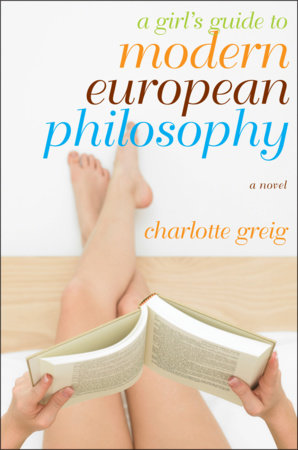

A Girl's Guide to Modern European Philosophy
By Charlotte Greig
By Charlotte Greig
Category: Women's Fiction
-
May 12, 2009 | ISBN 9781590513323
YOU MAY ALSO LIKE
 QUICK VIEW

The Year of Our Love
QUICK VIEW

Vagabonds!
QUICK VIEW
Either/Or
QUICK VIEW

New World Monkeys
QUICK VIEW
Gods of Want
QUICK VIEW
Diary of a Void
QUICK VIEW

Divorce Is in the Air
QUICK VIEW

C
QUICK VIEW

Mozart’s Ghost
QUICK VIEW
How to Fall Out of Love Madly
Praise
Publishers Weekly
In her first novel, singer-songwriter and music journalist Greig examines the case of second-year philosophy student Susanna, who frequently wakes up, screaming, from disconcerting dreams. It’s not so much the demands of her course load at the University of Sussex—Heidegger, Kierkegaard, Freud and friends—as it is Susanna’s own experience with Nietzsche’s “great separation,” or the sudden realization that “everything… means nothing to you.” Her boyfriend, Jason, an antiques dealer 10 years her senior, is stingy with affection. Which helps explain why Susanna falls for Rob, a brooding yet innocent-seeming classmate who frequents the dingy campus bars, digs a good protest and lives in dilapidated communal housing. Torn, Susanna opts to date both—it’s the swinging ’70s, after all—but the back-and-forth leaves her dizzy, and when she discovers she’s pregnant and realizes the father could be either man, neither her tutor nor her girlfriends can assuage her. Fumbling through the smoky corridors and lofty ideals of academia, Susanna is, like so many student philosophers, equal parts endearing and insufferable, and even if her dilemma isn’t the most original, Greig makes it uniquely hers.
Kirkus Reviews
A distinctive coming-of-age tale from a talented debut novelist based in the U.K. Susannah Jones studies philosophy at Sussex University. She lives with Jason, an antiques dealer whose Brunswick Square flat offers a welcome respite from 1970s-era student squalor. Jason’s almost 30, and he provides Susannah with access to a more sophisticated lifestyle. But he treats her more like a child or a pet than the liberated woman she would like to be—or, for that matter, the thoughtful, earnestly questing person she already is. Their relationship is additionally complicated by Rob, a fellow student whose obvious interest Susannah finds herself reciprocating. She fumbles along with both men until an unplanned pregnancy forces her to make some serious, irrevocable choices. In broad outline, Greig’s debut looks a lot like chick lit. Few entries in that genre, however, are so intelligent, sincere and skillfully executed. Susannah can be as dizzy as Bridget Jones, and her youthful confusion gives the novel much of its screwball charm. But she is also utterly serious about philosophy, and the author’s use of choice excerpts from great thinkers of the modern age sets this book apart. In one passage, Greig captures both the exquisite insecurity of adolescence and its desire for radical freedom and individuality by juxtaposing excerpts from Nietzsche with a description of Susannah cultivating a perfectly careless bohemian look through hours of careful labor. In another, Kierkegaard provides a heartbreaking counterpoint while Susannah decides whether or not to go through with an abortion. The author further enriches her novel with fully formed, sympathetically delineated secondary characters. Neither Jason nor Rob is a perfect hero, and neither is a complete cad. Susannah’s friends are real people rather than social accessories. The uncertain ending may not satisfy those who read for escape, but it certainly feels true. Women’s fiction that expects an intellectually adventurous and emotionally honest reader.
Observer
Olivia Laing
"Charlotte Greig’s debut … is genuinely moving …"
21 Books You’ve Been Meaning to Read
Buy Now


Just for joining you’ll get personalized recommendations on your dashboard daily and features only for members.
Find Out More Join Now Sign In