Random House: Bringing You the Best in Fiction, Nonfiction, and Children's Books
Authors
Books
Features
Newletters and Alerts

Buy now from Random House

  • The Ransom of Mercy Carter
  • Written by Caroline B. Cooney
  • Format: Trade Paperback | ISBN: 9780385740463
  • Our Price: $8.99
  • Quantity:
See more online stores - The Ransom of Mercy Carter

Buy now from Random House

  • The Ransom of Mercy Carter
  • Written by Caroline B. Cooney
  • Format: Paperback | ISBN: 9780440227755
  • Our Price: $6.99
  • Quantity:
See more online stores - The Ransom of Mercy Carter

Buy now from Random House

  • The Ransom of Mercy Carter
  • Written by Caroline B. Cooney
  • Format: eBook | ISBN: 9780375899232
  • Our Price: $6.99
  • Quantity:
See more online stores - The Ransom of Mercy Carter

The Ransom of Mercy Carter

    Select a Format:
  • Book
  • eBook

Written by Caroline B. CooneyAuthor Alerts:  Random House will alert you to new works by Caroline B. Cooney

eBook

List Price: $6.99

eBook

On Sale: August 09, 2011
Pages: 256 | ISBN: 978-0-375-89923-2
Published by : Delacorte Books for Young Readers RH Childrens Books
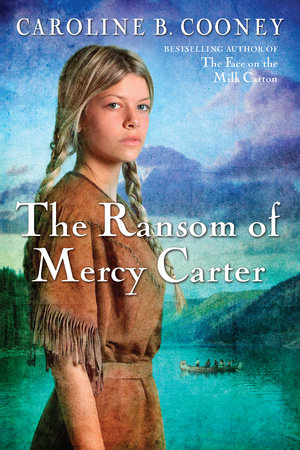
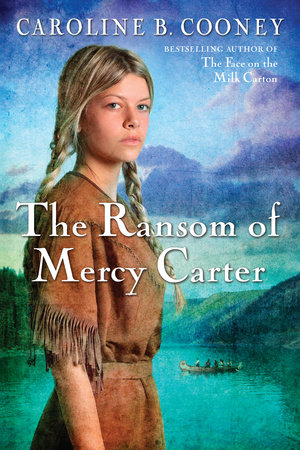
The Ransom of Mercy Carter Cover

Bookmark,
Share & Shelve:

  • Add This - The Ransom of Mercy Carter
  • Email this page - The Ransom of Mercy Carter
  • Print this page - The Ransom of Mercy Carter
ABOUT THE BOOK ABOUT THE BOOK
ABOUT THE AUTHOR ABOUT THE AUTHOR
PRAISE PRAISE
READER'S GUIDE READER'S GUIDE
Synopsis|Excerpt

Synopsis

Deerfield, Massachusetts is one of the most remote, and therefore dangerous, settlements in the English colonies. In 1704 an Indian tribe attacks the town, and Mercy Carter becomes separated from the rest of her family, some of whom do not survive. Mercy and hundreds of other settlers are herded together and ordered by the Indians to start walking. The grueling journey -- three hundred miles north to a Kahnawake Indian village in Canada -- takes more than 40 days. At first Mercy's only hope is that the English government in Boston will send ransom for her and the other white settlers. But days turn into months and Mercy, who has become a Kahnawake daughter, thinks less and less of ransom, of Deerfield, and even of her "English" family. She slowly discovers that the "savages" have traditions and family life that soon become her own, and Mercy begins to wonder: If ransom comes, will she take it?


From the Hardcover edition.

Excerpt

Deerfield, Massachusetts

February 28, 1704

Temperature 10 degrees below zero

Dear Lord, prayed Mercy Carter, do not let us be murdered in our beds tonight.

Mercy tucked her brothers in, packing them close. Or any night, she told the Lord, shifting her weight from foot to foot. Even though she wore both pairs of stockings to bed, the cold of the floor came through the heavy wool. It was the coldest night she could remember during a winter when every night had been colder than it ought to be.  Downstairs, where the fire was blazing, one of the soldiers had tried to write a letter to Boston and his ink had frozen.

She kissed each brother good night. The boys were wearing most of their clothes, which made them fat and funny under the quilts. She dreaded getting into her own bed, because she slept alone, and only body heat could keep anyone warm tonight.

Before she shuttered and barred the window, Mercy knelt to look out. In spite of twenty soldiers quartered in the village and every Deerfield man armed and at the ready, Mercy could never fall asleep until she herself checked the horizon.

Just below the window was the vegetable garden, covered now in three feet of snow. Against the barn, which sheltered one cow, two sheep and a pig, were drifts taller than Mercy, crusted over from freezing rain. Out beyond the stockade, icy fields gleamed like lakes in the starlight.

None of the children had been allowed out of the stockade since October. This winter a hen in the yard was not safe from an arrow, or a child from a bullet. Surrounded by thousands of square miles of wilderness--and they were 4 trapped in ten crowded acres.

Aunt Mary and Uncle Nathaniel and their two children, too afraid of Indian attack to stay on their farm, had been sleeping on the floor downstairs since the governor had first warned of possible attacks.

Four rooms. Seventeen people. Week after frigid week.

It was amazing that the three hundred citizens of Deerfield were not killing each other instead of waiting for the Indians to do it.

Lord, she wished her father were home. He had ridden down to Springfield to buy molasses and tobacco. Without Father, the house felt weak and open, even with soldiers sleeping downstairs. Even with Uncle Nathaniel.

Indians sneak up, Mercy reminded herself. Nobody can sneak across such crusty ice. We'd hear their feet crunching a mile away. Father said so.

Except that when the Indians had come last October, there'd been no sound. Mercy had been the only witness, leaning out this very window.

October in Massachusetts was crimson berries and orange pumpkins, tawny grass and bright red sumac. The colors called to Mercy like bugles; like battle cries. She had unpinned her hair to let the wind catch it and pretended to be the figurehead of a ship, although she had never seen the sea, or even a lake.

"I will lift up mine eyes unto the hills!" she told the horizon. She loved this psalm. "From whence cometh my help."

Swinging so far out the window that her fingertips barely held her safe, Mercy had spotted Zeb and John heading toward Frary's Bridge to bring in the cows. The tall grass around their thighs made them swim in dusty gold. Mercy's hair was the same color, like wheat in the sun, and she was admiring her own thick yellow hair when out of the grass appeared Indians, as natural as wildflowers. Before Mercy could choke back her psalm, they had encircled Zeb and John.

One shot was fired, one dash stopped, two surrenders made.

Zeb and John and the Indians vanished over a rise and out of Deerfield forever.

The boys had known better than to fight. Fighting meant a tomahawk to the head. Surrender meant a chance to live.

And Mercy had known better than to sound the alarm. Taking the boys was bait. The English would do anything to save one another. All the Indians needed to do was capture one white and the rest of the English would come running to the rescue.

Ambush was the Indian form of battle. They did not like casualties. It was not their plan that they should die; only whites. So if Mercy were to scream, the sentries would mount up and the whole village rush in pursuit. But the English would find their horses shot from beneath them, and where only Zeb and John had been lost, now twenty might die.

So Mercy had stayed silent.

The grass closed in, the captives were gone, and the world went on, full of color and glory.

I will lift up mine eyes unto the hills, from whence cometh my help? Mercy thought. Maybe in Israel, in the days of King David, the Lord sent help from the hills. But Massachusetts? Help does not come from our hills, Lord. Only Indians.

Mercy had shaken her fist at the Lord. How could you let those savages take Zeb and John? Why aren't You on our side? You sent us here! Take care of us!

Five months ago, and Mercy still trembled when she remembered her rage at the Lord God. It was the kind of thing that turned the Lord against Deerfield. Every sermon Mr. Williams had given this winter dealt with sin. The Lord had no choice, said Mr. Williams. Deerfield must suffer. Mercy had done her part to anger the Lord and she knew it.

Mercy pulled the shutter across the window, fastened it with the wooden bar and climbed into her freezing bed to consider her sins.

She had woven five yards of cloth today, but the Lord would not care about that. He would care that she harbored evil thoughts toward all three brides in Deerfield.

She was envious of Sally, who had gotten a perfect husband in Benjamin Burt. Horrified by Eliza, who had married an Indian, even if Andrew was a Praying Indian. Sickened by Abigail, whose choice was a French fur trader twenty years older than she was. How could Abigail marry a Frenchman? The French were the enemy. The English were at war with the French!


From the Hardcover edition.
Caroline B. Cooney

About Caroline B. Cooney

Caroline B. Cooney - The Ransom of Mercy Carter

Photo © Jane Feldman

“What more can life hold, than to know that because of your story, somebody out there has decided to read again!”—Caroline B. Cooney

Caroline B. Cooney's books have received several honors, including an IRA–CBC Children's Choice and being named an ALA Best Book for Young Adults.

ABOUT THE AUTHOR

Award-winning author Caroline B. Cooney knows what young adults like to read. In fact, Cooney’s all-time favorite fan letter came from a 12-year-old girl who hated reading. But after being forced to read one of Cooney’s books, the girl admitted it had not been a waste of time and had even been enjoyable. “And so,” wrote the girl, “I have come to an important decision. I am writing to tell you that I have decided to read a second book.”

Caroline Cooney was born in 1947 and grew up in Old Greenwich, Connecticut. This prolific author was always ambitious, and as a youth, loved school and was involved in many different activities. Cooney was also an avid reader and recalls that series books such as The Hardy Boys and Cherry Ames were her favorites. These characters had a big influence on her life, and in fact, she says that “Cherry Ames, Student Nurse was my reason to go to nursing school in Boston later in life.”

Cooney began writing in college. She professes,“I love writing and do not know why it is considered such a difficult, agonizing profession. I love all of it, thinking up the plots, getting to know the kids in the story, their parents, backyards, pizza toppings.”

Cooney is a master of mixing spellbinding suspense with thought-provoking insight into teenagers’ lives. One of her most popular books is The Face on the Milk Carton—the gripping story of a young girl who discovers that the picture of a missing child on a milk carton is actually a picture of herself. After writing this book, Cooney received hundreds of letters from readers who were bothered by the ending. “It wasn’t that they didn’ t like the ending, it was that they wanted some kind of resolution. Some said I should have written another chapter.” However, Cooney says she liked leaving the reader worrying about the character just as they would a real person. But one day, her daughter, Sayre, had an idea for a sequel that was so good, Cooney had to write it. The book that evolved was called Whatever Happened to Janie? Continuing where that novel leaves off, Cooney explores the themes of betrayal and peer pressure in The Voice on the Radio. Concluding the Janie Quartet is What Janie Found, in which Cooney masterfully spins a suspenseful story of family secrets that will have readers captivated until the very last word.

Cooney’s novel Burning Up explores the destructive nature of hatred, the crime of indifference, and the power of accepting love and responsibility.

In The Ransom of Mercy Carter, Cooney looks at an actual historic event that had been virtually unexplored in literature for young people. During a 1704 Indian attack on the Deerfield, Massachusetts, settlement, Mercy Carter is separated from her family and taken to a Kahnawake Indian village in Canada. As she awaits ransom, she discovers that the “savages” have traditions and family life that in time become her own.

Cooney completed her Time Travel Quartet with For All Time. In her novel Goddess of Yesterday, Cooney brings ancient Greece to life through careful research and master storytelling.

Most recently Cooney's Diamonds in the Shadow was named a 2008 ALA/YALSA Quick Pick and was a nominee for the Edgar Allen Poe Awards. Her latest gripping thriller, If the Witness Lied, details how love, devotion, and forgiveness make resilience—and recovery—possible.


AUTHOR FUN FACTS

Born: May 10 in Geneva, New York
Education: Greenwich, CT schools and various colleges
Residence: Westbrook, CT
Children: Louisa, Sayre (rhymes with fair), Harold
Inspiration for writing: I love a good story. I love to make things up.
Favorite hobbies: I read a lot. I buy books. I'm in a library (I use several) or a bookstore almost every day because I have to be around other people's books, too. I sing in several choirs, or play the piano for them.
Favorite foods: I'm omnivorous.
Favorite books: I read series books: Cherry Ames, Student Nurse, was the reason I went to nursing school. But my favorite series, and the only one I saved, was Magic by the Lake by Edward Eager.


PRAISE

IF THE WITNESS LIED

"Cooney's new psychologically penetrating page-turner immediately grabs readers then hangs on tight up to its satisfying conclusion."—Kirkus

"Anchored by a poignant sibling reunion, this family-drama-turned-thriller will have readers racing, heart in throat, to reach the conclusion." —Horn Book


DIAMONDS IN THE SHADOW

"Crackling language and nailbiting cliffhangers provide an easy way into the novel's big ideas, transforming topics that can often seem distant and abstract into a grippingly immediate reading experience." —Starred, Publishers Weekly

GODDESS OF YESTERDAY
“Characters from the Iliad, the Odyssey, and much of Greek tragedy make appearances in Anaxandra’ s tale, one that is as vivid as her red-gold hair. Teen readers will be mesmerized.”—Starred, Kirkus Reviews

“A compulsively readable story and may well lead readers to other Greek myths.” —Starred, Publishers Weekly

AMONG FRIENDS
“Readers will respond to the author’s candid view of friendship with its intense bonding, rivalry and sudden, surprising meanness.”—Booklist


BOTH SIDES OF TIME
"Not only a love story and a time-travel fantasy, but also a provocative and powerful examination of women, marriage, and relationships in two centuries.”—School Library Journal


BURNING UP
“Convincingly depicted and . . . compellingly chronicled.”—Starred, The Bulletin

"This thought-provoking story has a powerful message, effortlessly woven into the ordinary trappings of a teenager’s life.”—Kirkus Reviews


DRIVER’S ED
“A wrenching, breathlessly paced plot and an adrenaline-charged romance make Cooney’s latest novel nearly impossible to put down.”—Starred, Publishers Weekly

“Poignant.”—Starred, Booklist


THE FACE ON THE MILK CARTON
“Absorbing and convincing. Strong characterizations and suspenseful, impeccably paced action add to this novel’s appeal.”—Publishers Weekly

“A real page-turner.”—Kirkus Reviews


THE RANSOM OF MERCY CARTER
“Gripping and thought provoking.”—Publishers Weekly


WHATEVER HAPPENED TO JANIE?
“The power and nature of love is wrenchingly illustrated throughout this provocative novel. . . . The emotions of its characters remain excruciatingly real.”—Starred, Publishers Weekly

“A gripping sequel to The Face on the Milk Carton. . . The gut-wrenching circumstances in which the characters find themselves are honestly conveyed.”—Booklist


THE VOICE ON THE RADIO
“[Cooney] has taken this novel to extraordinary heights.”—Starred, School Library Journal

“Readers of Cooney’s addictive The Face on the Milk Carton and Whatever Happened to Janie? can start licking their chops.”—Starred, Publishers Weekly
Praise

Praise

"The drama of history unfolds in this gripping tale.” -- School Library Journal

"Cooney’s trademark staccato delivery keeps the pages turning.” -- Publishers Weekly


From the Paperback edition.
Teachers Guide

Teacher's Guide


ABOUT THIS BOOK

Mercy Carter is taken captive by the Mohawk Indians during the French and Indian War and brought to Canada where she is converted to the Indian way of life.

Mercy Carter lives with her family in Deerfield, Massachusetts, a remote settlement in the English colonies, when the small town is attacked by Mohawk Indians in 1704. The attack, which lasts only a few hours, changes the lives of everyone in the town, but 11-year-old Mercy Carter changes in ways that even she cannot believe.

The Indians take their captives on a 300-mile journey through ice and snow to the Indian village of Kahnawake in Canada, where they are expected to follow Indian ways. The only hope for the captives is that the English government will send ransom. As days turn into weeks and weeks into months, Mercy becomes comfortable with Indian life, and she begins to see her captors as her family rather than the enemy. Her new life leaves her contemplating a question that will determine her fate: If ransom comes, will she leave?

ABOUT THIS AUTHOR

Caroline B. Cooney is the author of many young adult novels. They include Tune In Anytime; Burning Up; The Face on the Milk Carton (An IRA—CBC Children’s Choice Book) and its companions, Whatever Happened to Janie?, The Voice on the Radio (each an ALA Best Book for Young Adults), and What Janie Found; What Child Is This? (an ALA Best Book for Young Adults); Driver’s Ed (an ALA Best Book for Young Adults and a Booklist Children’s Editors’ Choice); Among Friends; Twenty Pageants Later; and the time-travel romance trilogy Both Sides of Time, Out of Time, and Prisoner of Time. Caroline B. Cooney lives in Westbrook, Connecticut.

TEACHING IDEAS

Pre-Reading Activity
Help students understand the historical setting of the novel by providing background information about the French and Indian War. Discuss with students the major reasons for the war and the role of the French in the war. How did the French use Indians to help fight the war? How did the English colonies fight back?

Interdisciplinary Connections

LANGUAGE ARTS
–Ask students to study the Indian names in the novel. How do the names fit the personalities of the individuals? At first, Ruth’s name is Mahakemo (Fire Eats Her) and then she is given the name Spukumenen (Let the Sky In). Ask students to write a character sketch of Ruth that explains her name change. Ask students to create an Indian name for themselves and to explain its meaning.

Each chapter of the novel begins with the date, place, and temperature. Why are these facts pertinent to the story? Explain that historical novels often list the time and setting in order to add relevance and impact. Ask students to compare the structure of this novel with journal writing. How are they similar? What are the differences?

SOCIAL STUDIES–Mercy is surprised by the construc-tion of the Indian houses. Ask students to research how
the Mohawk Indians constructed their houses and how their villages were arranged. Then have them construct a miniature Mohawk Indian village.

SCIENCE–Many of the settlers suffer frostbite on the journey. Ask students to research the treatment for frostbite. Ask them to list other diseases that the settlers face–e.g., dysentery. Then ask them to use books in the library media center or sites on the Internet to learn about herbs that Indians used to treat such diseases.

MATH–The Mohawk Indians lived in the village of Kahnawake on the St. Lawrence River. Ask students to locate Deerfield, Massachusetts, on a map and trace various routes that the Indians could have taken with their captives to their final destination. Calculate the approximate mileage of each route. Then ask students to use information in the novel to determine the probable route that the Indians took from Deerfield to Kahnawake.

ART–Quilting is an art form that was practiced by many colonial women. Ask students to find pictures of quilts created by Faith Ringgold and study the stories that she creates with her quilt designs. Read Tar Beach together. Instruct students to use squares of construction paper to create a story quilt that tells Mercy Carter’s tale, beginning with her captivity and ending with her decision to remain with the Indians.


Thematic Connections

COURAGE
–Ask students to define courage. How might Mercy Carter define courage? How did children in the colonies learn courage in their daily lives? There are times throughout the journey that Mercy shows an exceptional amount of courage. Discuss whether her courage is driven by feelings of responsibility for her siblings. At what moments does she almost lose her courage?

FEAR–People deal with fear in different ways. Compare and contrast how Mercy, Ruth, and Eben deal with fear. How do they help one another face their fears? At what point in the novel does Mercy lose her fear and begin to feel safe among the Indians? How is this shown through the author’s use of language?

SURVIVAL–Many of the people taken captive in Deerfield die on the 300-mile journey. How do the Indians decide who will live and who will die? Why are the survivors important to the Indians? It becomes evident early in the story that Mercy Carter is a survivor. What is it about Mercy’s personality that makes her a survivor? Discuss things that she learns about the Indians that make her survive the horrendous journey.

FAMILY–Discuss Mercy’s role in keeping her family together. Why do the Indians separate family members on the journey to Canada? Why does Mercy feel guilty about Marah’s death? Discuss the structure of the Indian family. Why is Mercy surprised at the daily routine of the Indian women and children? At what point in the novel does Mercy begin to feel part of the Indian family?

PREJUDICE–The people of Deerfield often refer to the Indians as “savages.” Discuss with students why such a derogatory term was used to describe the Indians. Ask students if they feel the term is applicable. At what point in the novel does Mercy discover that these “savages” have their own traditions and family. How does she feel about the Indians by the end of the novel?

VOCABULARY

The vocabulary in the novel isn’t difficult, and the Indian words are explained within the text. Have students write down unfamiliar words and try to define them taking clues from the context of the story. Such words may include quartered (p. 2), sentries (p. 4), melee (p. 20), rancid (p. 34), gauntlet (p. 79), sinews (p. 96), precipice (p. 109), and frippery (p. 179).

REVIEWS

“Gripping and thought-provoking.” —Publishers Weekly

BEYOND THE BOOK

INTERNET RESOURCES

Encyclopædia Britannica: French and Indian War
www.britannica.com/bcom/eb/article/1/0,5716,36001+1+35340,00.html
A brief descriptive entry about the French and Indian War from Encyclopædia Britannica. Cross-references within the text link to other entries about people or events relating to the war.

Kahon:wes’s Mohawk & Iroquois Index
www.kahonwes.com
A discussion of the Mohawk Nation including samples of the Mohawk language.

The Wampum Chronicles
www.wampumchronicles.com
A well-researched Web site of Mohawk history.

Old Deerfield, Massachusetts
www.old-deerfield.org
The official site for historic Deerfield, Massachusetts.

OTHER TITLES OF INTEREST

RELATED NOVELS

Soft Rain
- A Story of the Cherokee Trail of Tears
Cornelia Cornelissen
Family • Prejudice • Survival
Historical Fiction (1838 Trail of Tears)
Grades 4-6 / 0-440-41242-0

Cherokee Sister
Debbie Dadey
Survival • Prejudice • Fear
Historical Fiction (1838 Trail of Tears)
Grades 4-6 / 0-385-32703-X

Johnny Tremain
Esther Forbes
Courage • Survival • Fear
Revolutionary War
Grades 6 up / 0-440-94250-0

The Slave Dancer
Paula Fox
Courage • Survival • Fear
Historical Fiction (1840s)
Grades 6 up / 0-440-96132-7

The Sign of the Beaver
Elizabeth George Speare
Courage • Survival • Fear
Colonial America
Grades 5-7 / 0-440-47900-2

ABOUT THIS GUIDE

In the Classoom

Based on actual events, this compelling story, set during the French and Indian War, offers students the opportunity to explore the personal tragedies that occurred during this bloody fight over the fur trade. This novel is an excellent choice to use in the social studies curriculum.

In addition, there are activities in this guide that link the novel to the language arts, science, math, art, and music curricula. There are discussion questions that invite students to think critically about the themes of courage, fear, survival, family, and prejudice.

Download a PDF of the Teacher's Guide

Your E-Mail Address
send me a copy

Recipient's E-Mail Address
(multiple addresses may be separated by commas)

A personal message: