Author Q&A
A Conversation with Pearl Cleage
Q: What inspired you to write this story?
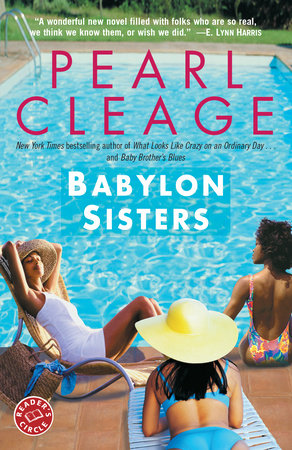
Pearl Cleage: I wanted to write a story about a mother and a daughter going through that passage from “mommy and little girl” to two grown women. I was present at the birth of my granddaughter, Chloe, and I had been thinking a lot about mothers and daughters and the passages into womanhood that culminate in a certain way with the birth of the child of your child. I was present at my grandson, Michael’s, birth, too, but watching Chloe come into the world was a different feeling for me. He has taken his place in the manhood circle. Chloe has taken her place in the sisterhood. All these feelings were swirling around on a personal level and made me want to write about a mother and a daughter trying to grow into who they really are, individually and together. I also wanted to address the whole idea of women around the world thinking of every woman’s children as our own. I’m very concerned about the role our country is playing in violent conflicts. The news reports from Iraq with so many civilian deaths, so many weeping women and murdered children, were very much on my mind. The siege of Fallujah made me feel powerless and angry. Writing Babylon Sisters and exploring the ways women can connect with each other by protecting each other’s children helped me channel those feelings into words. The idea of universal motherhood is a powerful thing and I think it will be a key to creating a peaceful world.
Q: You write about your community–Atlanta’s West End–with such brave hope and loving passion. What keeps you rooted there and are you seeing any of the progress you describe in your novels?
PC: I love writing about the West End because I’ve lived in southwest Atlanta for thirty years and I know my neighborhood so well. One of my jobs in the mid-seventies was working for Mayor Maynard Jackson. As director of communications, I got to know the city and this neighborhood. I became a community activist and I am very familiar with the problems and the pleasures of living here. There are so many stories to tell! Grounding a series of novels in this community gives me the chance to explore different characters who naturally interact with each other because they live close to each other. It is not strange for Catherine to know about Blue Hamilton even though he doesn’t have a big part in this book. It is not strange for Aunt Abbie, the post-menopausal visionary from Some Things I Never Thought I’d Do to reappear in Baby Brother’s Blues (my new novel, due in the spring). I like being able to reflect the changes in the neighborhood through the books. When the Krispy Kreme moved to a new location, my next novel reflected the move. As a new condominium complex goes up on the site of a long-vacant lot that Flora Lumumba wanted to use for her gardens in Some Things I Never Thought I’d Do, my next book will have to reflect that progress. As far as West End becoming as peaceful as it is in my books, thanks to Brother Hamilton, we’re working on it!
Q: One theme in Babylon Sisters and your other works, is that of free women. What does that mean to you in these days and times?
PC: I think a free woman is a woman who is fully conscious of herself as a citizen of the world with all the responsibilities that entails. There is a list of ten things a free woman should know in my novel What Looks Like Crazy on an Ordinary Day . . . I think it’s a good list, even if I can’t do all the things on it yet! Freedom to me means making choices, taking responsibility and telling the truth. Bishop Tutu said recently, if we are to save the world, women must have a revolution. I couldn’t have said it better myself!
Q: We often hear politicians talk about “fatherless children.” Why did you create a very evolved, conscious woman who deliberately kept her daughter in the dark about her father?
PC: Talking about “fatherless children” is like talking about “slaves.” The term is much too general to be helpful in talking about a problem that demands specificity. Each “slave” is an individual human being, just like each of us. If we lump them all together, it keeps us from seeing their individual humanity. A term like “fatherless children” accomplishes the same thing. It robs the people being described of their individuality. No child is fatherless. Each father makes a choice about his relationship to his child. Each one of those choices is a story. In B.J.’s case, he did not know he was a father so he never had a chance to make the choice, good or bad. This is part of what Catherine is struggling with during the book. Does she have the right not to tell him he has fathered a child? Her decision not to tell him is so closely related to his decision not to go with her to the abortion. Neither one of them wanted to have the abortion, but both were committed to not curtailing the freedom of the other. They thought they were doing the most loving thing under the circumstances. I do admire Catherine’s conscious effort to construct a family for Phoebe. She made sure that her daughter had a great godfather, several aunt figures and she knew her grandmother. I think part of our challenge is to be sure that when children are not with their biological fathers, for whatever reason, that the community of us make sure that child has good, positive relationships with good men like Louis in Babylon Sisters.
Q: Why did you want to explore that theme? How did you feel toward Catherine for doing that to Phoebe?
PC: The whole idea of Catherine not telling B.J. about Phoebe grows out of my own recent thinking about the women’s movement. I am trying to really look critically at some of the ways we tried to change the culture, including marriage and family relationships. I understand Catherine’s decision. She did not want B.J. to marry her out of obligation and as a feminist/womanist she believed in her own right to choose, but I think we have to also look at what “rights” we want the men to have in these choices. There is so much to examine and discover. Working with Catherine’s dilemma is, I think, part of what will, and should, be a longer examination of the goals and accomplishments of the women’s movement.
Q: In the face of so much political craziness in our country and the world, and the challenges facing African American communities, what keeps you from giving up hope?
PC: I am angry and depressed when I look at governments, but I am optimistic about people! I think human beings have the ability to change the way we live together. I think we have to do the hard work necessary to make the world better for ourselves and our children and our grandchildren. Toni Cade Bambara once said that the major struggle of the twenty-first century is the one between the psychopaths who want war and those of us who want peace. I am optimistic when I look at the possible alliances that can exist between women all over the world in struggling to make better lives for their children. Grown people can, and do, disagree about almost everything, but it is hard to find a woman who will not say she believes in making babies safe and warm and happy and well-fed and peaceful. Starting with that premise keeps me optimistic. I believe that Dr. Martin Luther King, Jr. was right when he said that the arc of the universe is long, but it bends toward justice. We have to be a part of making sure that we survive on the planet long enough to see that happen!
Q: What is the most challenging feedback you’ve received from your readers? How have they helped your writing evolve?
PC: The feedback I get from my readers is always so positive that it makes me want to write faster to get the books into their hands more quickly! The main criticism I get is that people wish the books were longer because they don’t want to let my characters go. That’s a writer’s dream! Such positive feedback makes me want to work harder to write better. Writing is an art that constantly evolves. As you grow and see the world more clearly, your writing reflects that new clarity. I am always pushing myself to see more, understand more and tell what I know.
Q: Your novels show the potential for very conscious, healthy black male—female relationships, even as you explore various types of abuse against women and girls. Do you write these great relationships as an affirmation of what can be?
PC: I feel as if the main characters in my books are always trying to fall in love and change the world, not necessarily in that order. It is always fun to write love stories with happy endings that are grounded in real lives. I always want my characters to be able to fall in love in real settings without having to be rich and famous and living in fabulous beach houses. Most of us have to learn to fall in love and sustain it while we go to the post office and don’t forget the groceries and all the mundane things we do in our lives. My characters are always open to love, but don’t really think they’ll find it. When they do, they are able to bring to bear all the things they learned when they were on their own and make those romantic relationships stronger. One of the things that is important to me in the novels is that the men and women who are in love tell each other the truth about everything. The thing that messes up more romantic relationships than anything else is lying. In my books, truth is not only required, but part of the foreplay.
Q: How do you strive to grow from one novel to the next? What bar did you set for yourself in writing Babylon Sisters?
PC: I’m always trying to tell a good story that presents characters we believe could exist in the real world. As a writer, I’m always working to improve the craft of what I do. I want to write better and better with every book. The process is always the same for me–find the characters, find their story, tell the truth of their lives.
Q: What do you read for pleasure and inspiration?
PC: When I’m writing fiction, I can’t read fiction, which is frustrating sometimes because I love a good novel. I’ve been reading more autobiographies which are usually just as exciting as novels. I’m also a big movie fan. As part of trying to widen my world view, I’ve been watching films from the middle east. It’s amazing how much information you can absorb about other cultures from looking at their movies. While I was writing Babylon Sisters, I think watching movies from Iraq and Iran really helped me see the women and children there as real human beings, not just figures passing through a news report about the war around them.
Q: Do your readers ever ask what they can do to contribute to the kind of relationships and community that you write so vividly about? What do you (or would you like to) tell them?
PC: I believe that bumper sticker that says Think Globally/Act Locally. There is always something to be done to improve a community or a neighborhood. Meeting the neighbors is always a good place to start.
Q: What do you love most about being Black? About being a woman?
PC: When I was younger, I used to think of race and gender as two separate things, but I don’t anymore. I am always black and I’m always a woman. I always love being both! What intrigues me more these days is trying to think about myself as a human being. Not that race and gender aren’t always important, but sometimes we limit ourselves when we continue to put them at the front of every discussion.
I also find myself thinking more about age these days. Our American culture has such a strange attitude toward women over the age of thirty-five or forty. Part of what is fun for me in my novels is to push the age of some of the female characters so that we can begin to see women in their fifties and sixties still having vibrant lives.
Q: What, for you, is the hardest part of being a writer? The best part?
PC: Being a writer is so much a part of who and what I am that I can’t imagine doing anything else. There are parts of it that are hard, but whenever I find myself whining about not being able to get this character right or this chapter to go the way I want it to go, I try to remember my grandfather going to work at the Ford plant in Detroit where he worked for forty years. He would catch two street cars (shows how long ago that was!) to get to work every day and two in the evening to return home. My grandmother would pack his lunch box. Although I know it was hard, loud, dangerous work, I never once heard my grandfather complain. He was taking care of his family and he did his job with discipline and grace every day for forty years. His example makes me feel like any complaining I do is not only ungrateful but petty–two things I never want to be! There are lots of best parts, too. I love the early days of discovering what the book is about and who the characters are. I love the struggle to put it all on paper. I love the moment you realize it’s going right. I love the moment when it’s almost done and then, finally, you can write those lovely words: the end. And then I get to go out and meet people who have read the book and want to talk about it! When I was a little girl in Detroit, this was the life I dreamed about, and here it is! The good thing is, I have sense enough to be grateful every minute of every day.
Q: I read once where you wrote “I am writing for my life.” Is that still true? How has that imperative changed over the years?
PC: When I wrote that in Mad at Miles, I was struggling to understand many things that were frightening to me. Domestic violence, rabid nationalism, duplicity among friends–all these things were so confusing to me and I was writing to understand and to protect myself from dangers within and without that I couldn’t even articulate. Passing on my thoughts to other women seemed to me to be part of a survival network. Today, I no longer feel frightened by these things. I am as committed as I ever was to being a part of eradicating these things, but I no longer see myself in danger because of a lack of understanding. I know that my work is a part of creating that larger circle of female understanding that Bishop Tutu is looking to start the revolution. I think if I wrote that today, I’d say “I’m writing for our lives.”




 QUICK VIEW