



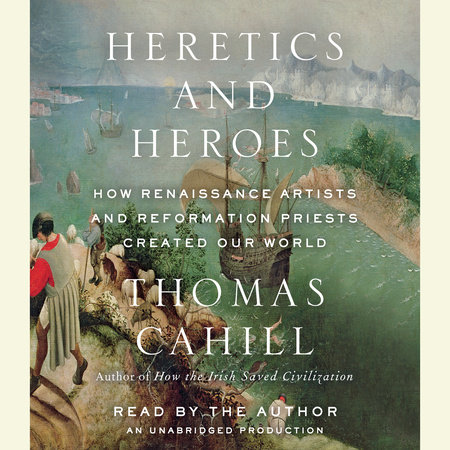

Heretics and Heroes
By Thomas Cahill
By Thomas Cahill
By Thomas Cahill
By Thomas Cahill
By Thomas Cahill
Read by Thomas Cahill
By Thomas Cahill
Read by Thomas Cahill
Part of The Hinges of History
Part of The Hinges of History
Part of The Hinges of History
Category: Art | European World History
Category: Art | European World History
Category: Art | European World History | Audiobooks
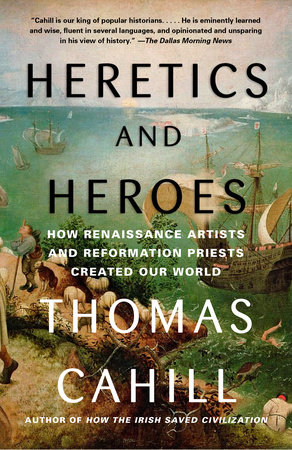
-
$20.00
Aug 12, 2014 | ISBN 9780385495585
-
Oct 29, 2013 | ISBN 9780385534161
-
Oct 29, 2013 | ISBN 9780307967503
770 Minutes
Buy the Audiobook Download:
YOU MAY ALSO LIKE
 QUICK VIEW
The Ghosts of Cannae
QUICK VIEW
Jesus of Nazareth, King of the Jews
QUICK VIEW
The Historical Figure of Jesus
QUICK VIEW
Heroes
QUICK VIEW
An Odyssey
QUICK VIEW
The Rule of St. Benedict
QUICK VIEW
Dangerous Mystic
QUICK VIEW
In the Name of the Father
QUICK VIEW
Descartes’ Bones
QUICK VIEW
Mr. Muo’s Travelling Couch
Praise
“Cahill is our king of popular historians, and rightly so. He is eminently learned and wise . . . opinionated and unsparing in his view of history.” —The Dallas Morning News
“A great achievement. . . . Seemingly effortless illumination of the Renaissance and the Reformation.” —James S. Shapiro, author of Contested Will: Who Wrote Shakespeare?
“In much writing of history, the erudition of the authors is evident: even the footnotes have footnotes. But now and then we get to read history that is, simply, interesting. Tom Cahill is the master in this genre. He knows what the specialists know, but his form of scholarly art lets readers be freshly lured into the plot. He is the virtuoso of genres and moves easily from one to another in such a way that we find ourselves informed and inspired.
Some years ago Rabbi Samuel Sandmel wrote a book on The Enjoyment of Scripture. What a shocking thought, that a noted scholar thought his writing could be enjoyed! In his series, The Hinges of History, and especially in his newest book, Heretics and Heroes, Cahill shocks by writing for reader-enjoyment—which is the best way to advance learning. I am glad to be in the company of enjoyers and learners.”
—Martin E. Marty, Fairfax M. Cone Distinguished Service Professor Emeritus, The University of Chicago
“Remarkable. . . . An entertaining yet thought-provoking examination of Western civilization.” —Publishers Weekly (starred)
“Wonderful. . . . Shows how events and a change in philosophical views can uproot and reconfigure entire civilizations.” —Kirkus Reviews (starred)
21 Books You’ve Been Meaning to Read
Buy Now


Just for joining you’ll get personalized recommendations on your dashboard daily and features only for members.
Find Out More Join Now Sign In