Excerpt
What’s More Real: Sunday Church or Virtual Community?
Traditional Christian teaching says we learn about human nature and identity by studying God. God’s character shows us what to strive for, and God’s Spirit searches our hearts to reveal the ways in which we resist God’s love, guidance, and correction. All of that is true.
However, it is also true that an accurate understanding of the deepest longings of the human heart tells us much about who God is and what God desires for us and from us. After all, if we are created in God’s image, it follows that there are undeniable reflections of God’s nature visible in us.
In this e-book exclusive,
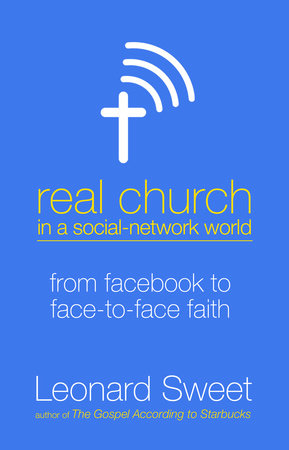
Real Church in a Social-Network World, Christian visionary Leonard Sweet applies his keen analysis to both the church and the individual. He looks at the changing culture and the people who migrate from the old to what is replacing it. He points out the lessons that the church needs to learn from those who are drawn to a relational approach to life.
We can’t deny our need for oxygen, food, and water. Likewise, there are spiritual and relational absolutes that cannot be denied. And it turns out that the natives of the new culture are passionately pursuing the core longings and requirements of the human soul. In fact, more than anything else, the unrelenting pursuit of connection and relationship is their identifying trait.
There is great opportunity for the church to reevaluate its approach to relationship. While preaching the gospel, which promises a relationship with God, has the church lost sight of the centrality of human relationships in the body of Christ? Will the church learn from the social-media generation and do some soul-searching?
In this collection, Sweet asks the questions, how does God speak to us, and how can we most faithfully live out Christian faith? In answering those questions, he looks at two worlds: the church and the broader culture—especially the world of young adults. The church world tends to be attracted to the mind, placing confidence in conclusions that arise from a careful examination of the available evidence. The broader culture is more geared to direct experience and the relational aspects of life. The latter world resonates with God’s practice of sending a personal representative, while the church puts more confidence in the idea of a prepared statement from on high.
Sweet sees in the social-networking generation a passion for connection, community, knowing others, and being known by others. This untiring pursuit of belonging and relationship calls to mind the body of Christ—diverse members connecting in unexpected ways. (Sweet explores the social-networking generation more fully in his new book
Viral [WaterBrook, 2012].)
Sweet notes that the church seems to be preoccupied with measurements and statistics, comparisons and definitions, doctrinal precision and organizational concerns. Will the body of Christ realize that much can be learned from the lives of younger members of the culture at large, those who seek connection and relationship? Can the church reclaim the values of knowing and being known, and take the risks necessary to live out Christian faith in everyday life?
Excerpted from Real Church in a Social Network World by Leonard Sweet. Copyright © 2011 by Leonard Sweet. Excerpted by permission of WaterBrook Press, a division of Random House, Inc. All rights reserved. No part of this excerpt may be reproduced or reprinted without permission in writing from the publisher.