Author Q&A
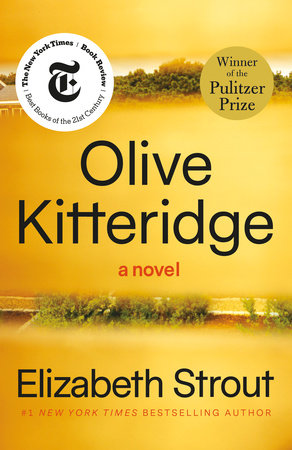
Random House Reader’s Circle sat down with Olive Kitteridge and Elizabeth Strout in a doughnut shop in Olive’s hometown of Crosby, Maine.
Random House Reader’s Circle: Thank you both for meeting with us. This is such a treat.
Olive Kitteridge: Well, it’s strange, I’ll say that.
Elizabeth Strout: It’s lovely to be here, thank you.
RHRC: Ms. Strout, our first question is for you. Which characters were the easiest for you to write?
ES: The easiest character to write about was Olive herself. She is so vibrant, so powerful in her desires and opinions, she came to me fully formed and with little trouble. Whenever she walked through a door, took a ride in her car, or walked along the river, I felt lucky to follow her.
Harmon, the hardware store owner, was also easily available to me, though in a very different way. His quiet sadness helped me see him, made me feel for his situation. Louise Larkin came to me clearly, as did Jack Kennison, and Angela O’Meara. And the steadfast Henry, of course.
OK: Wait, you were following me? I knew it. I don’t know why you felt so compelled to write about me. There are far more interesting people in Crosby to talk about.
ES: I did talk about them, Olive. But the truth is, you are the most fascinating to me. You are ferocious and complicated and kindly and sometimes cruel. In essence, you are a little bit of each of us.
RHRC: That is gorgeously said, Ms. Strout. Is there something about Olive’s complexities that made you decide to write about her through a collection of related short stories, as opposed to a novel? What was it about this format that worked best for you?
ES: I chose to use this form primarily because I envisioned the power of Olive’s character as best told in an episodic manner. I thought the reader might need a little break from her at times, as well.
OK: A break from me?
ES: Well, Olive, you are a force to contend with. Besides, I also love point of view, and I thought it would be interesting for the reader to see you from different sets of eyes in the community. You are Olive, but you are also a member of the town, and therefore your role, in its many permutations, could be revealed by telling the story of you in this way.
OK: Well, speaking of the community: Were the single folks in Crosby just plain boring to you, or do you enjoy telling the secrets of old couples who’ve been married so long that no one even thinks they have secrets anymore?
ES: Olive, I’m not sure it’s fair to say that the single folks of Crosby were boring to me. And I also think about half the population of this country is married. Therefore, to write about this town would necessarily entail writing about married couples. There are also a number of stories in this book that do not include married people. Angie O’Meara was single all of her life, and she was hardly boring to me. Nor was the tortured Kevin Coulson. And Rebecca is young and single, and her story was compelling to me. And Julie, who runs away–it looks like she may be single for a while, depending on what Bruce decides to do.
Do I enjoy telling the secrets of old married couples? I adore telling the secrets of old married couples. A marriage is always a source of great drama for a fiction writer. It is in our most intimate relationships that we are truly revealed, and this is why, perhaps, I chose to write about a variety of married relationships. It was not a conscious decision. And besides, who doesn’t like learning a good secret or two?
RHRC: We sure do. In fact, we’re just dying to know–Mrs. Kitteridge, Ms. Strout–is there a reason doughnuts are so prominently featured in these stories?
OK: That’s the truth. You seem to make note of every one I have–or that Bonnie craves, for that matter!
ES: I think Olive was the one who suggested meeting in this doughnut shop where we are now. And why not? Look around. Olive comes from a time and place where doughnut shops abound. She loves the comfort of food, and doughnuts are a source of comfort to her, as they are for many people. She’s not entirely careless about her physical well being, but the doughnuts represent a certain heedlessness in her desire to appease her appetites.
OK: So, do you have a predilection toward doughnuts, too?
ES: Oh, don’t be defensive, Olive. I know exactly how pleasing a good doughnut can be.
RHRC: Don’t we all?
OK: But before we get off the topic of secrets: What did Angie O’Meara tell you about her affairs? Who knew?
ES: Ah, you see, you like a good secret as much as the next person. Poor Angie, she did not have an easy time of it.
OK: Did you suspect that Angie was the one causing the bruises on her old mother in the nursing home?
ES: Well, that’s up to the reader to decide. But Angie suffered in that affair with Malcolm Moody for years. She didn’t think she deserved much better until the very end of the story when–whether or not anyone knows–she decides her dignity can still be salvaged by moving away from the role of the “other woman.”
OK: Has Suzanne been in touch with you at all? I wonder what that no-good woman is up to these days.
ES: I have no idea what Suzanne is up to, but hopefully she is saving lives by encouraging people to have their colonoscopies. By the way– I think you may be due.
RHRC: Mrs. Kitteridge, we’ll change the topic, as you seem a bit uncomfortable. Ms. Strout, may we ask where you got the information about Henry and–
OK: Yes, just wait a minute here. What were you insinuating about Henry and Denise Thibodeau?
ES: I was not insinuating anything, Olive, and you know that. Come now, you’re an intelligent woman, and you don’t flinch from the truth. You surely know that in the course of a long marriage it is not unusual for a husband or a wife to develop a crush on someone else, as you yourself did. If Henry needed to feel important in a way that you could not (at that time in your lives) make him feel, he is only human; that he would be drawn to someone who needed him is not unreasonable. He did not act on this, and you did not act on your own attraction to another. For all your problems, you and Henry were very good friends, and you loved each other as best you could.
RHRC: Yes, Mrs. Kitteridge, we are all very sorry for your loss. Mr. Kitteridge was an amazing man. Did you notice any changes in yourself after Henry’s death?
OK: When your husband of many, many years dies, you see nothing for a long while. There is anguish and terror. And then you may see yourself in a book.
ES: What did you notice about yourself, seeing your life in writing this way?
OK: That I couldn’t control everything. I didn’t think I could, of course. But I still saw that–that things happen that you can’t control. That you can go on. Amazing, really.
RHRC: Amazing indeed.
OK: You know what else is amazing? This book. It may be the strangest thing that ever happened to me, reading this book, but I thought it was pretty damn good. Still, I never thought to compare the two Kevins– you know, Bonnie’s boy and the Coulson kid. Did you write them so similarly on purpose?
ES: Well, I guess I don’t see them as similar. Kevin Coulson was a very depressed young man with a particular and extremely difficult family history. Bonnie’s son, Kevin, came from a family that functioned far better, and he had an easygoing relationship with both his parents. If he was made a bit nervous by his young wife and her strict vegetarian beliefs, well–that is hardly a large problem. Certainly nothing as large as what Kevin Coulson faced.
OK: Imagine not eating carrot soup because the base is made from chicken stock. I hate that kind of foolishness.
RHRC: Mrs. Kitteridge, our next question is for you. Which of your students do you remember the best?
OK: Oh, I had a young girl years ago. Tense as a witch. Beautiful girl. She’d often have tears in her eyes. She’d come speak to me after school, and just stand there with tears in her big pretty eyes. She told me, eventually, what was going on. But I’m not going to tell you.
ES: Which of your students reminded you most of yourself?
OK: The ones who were mad. I don’t mean crazy-mad. I mean angry-mad. The ones who had some spit and vinegar to them.
RHRC: Interesting. Ms. Strout, do you see any of yourself in Olive? In Henry? In Christopher?
ES: I actually see myself in all my characters. In order to imagine what it feels like to be another person I have to use my own experiences and responses to the world. I have to pay attention to what I have felt and observed, then push these responses to an extreme while keeping the story within the realm of being psychologically and emotionally true. Many times after writing a story or a novel, I will suddenly think, oh, I’m feeling what (for example) Olive would feel. But in fact, the process has worked the other way around.
RHRC: What do you think is the best thing about Olive? Do you think she’s aware of how people in town perceive her–especially before Henry’s illness?
ES: I think Olive is partially aware of how people in town perceive her. But there are different perceptions of her, remember. To some, she is insightful and likeable. To others she is bossy and contentious. I think to some extent she believes that she doesn’t care what people think of her, but I also think that she does care. She is easily wounded, as when her first daughter-in-law insults her new dress. And she is fiercely proud of her New England ancestry. I think she may not understand that her relationship to her son is as possessive as it originally is. But the best thing about Olive is her forthrightness, her ability to eventually see more and more of herself. While she is, like most of us, blind to aspects of herself, she does not shy away from things she begins to perceive about herself; she is willing to strive after the truth. This makes her commendable, I think.
OK: Yuh. That’s ducky. Duck soup.
RHRC: What do you hope your readers get out of reading Olive’s story–or stories, as they are?
ES: I would hope that my readers feel a sense of awe at the quality of human endurance, at the endurance of love in the face of a variety of difficulties; that the quotidian life is not always easy, and is something worthy of respect. I would also hope that readers receive a larger understanding, or a different understanding, of what it means to be human, than they might have had before. We suffer from being quick to judge, quick to make excuses for ourselves and others, and I would like the reader to feel that we are all, more or less, in a similar state as we love and disappoint one another, and that we try, most of us, as best we can, and that to fail and succeed is what we do.
RHRC: Thank you both so much for your time. This was really–
ES: Before you go, Olive, may I ask if you think Patty Howe was trying to kill herself? Because there might be some confusion about that.
OK: Why in the world would Patty Howe be trying to kill herself? She has a lovely husband and is looking forward to a family, and she was picking him flowers. She also has a nice, smart mother, and if she was careless in getting too close to the edge of that drop-off, well, accidents happen frequently on these jagged coastline rocks. Kill herself? You’re crazy.
ES: But don’t you think there are maybe a lot of suicidal thoughts– or suicide attempts–for a small town like Crosby? Why do you think that is?
OK: You may be the writer, Elizabeth, but I think it’s a wacky question, and I’ll tell you something else–it’s none of your damn business. Goodbye, people. I have a garden to weed.




 QUICK VIEW