



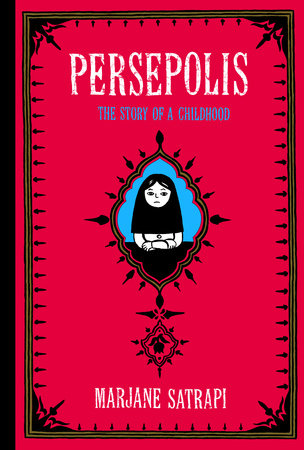

Persepolis
By Marjane Satrapi
By Marjane Satrapi
By Marjane Satrapi
By Marjane Satrapi
Part of Pantheon Graphic Library
Part of Pantheon Graphic Library
Category: Nonfiction Graphic Novels | Biography & Memoir | Asian World History
Category: Nonfiction Graphic Novels | Biography & Memoir | Asian World History
-
$16.00
Jun 01, 2004 | ISBN 9780375714573
-
$24.00
Apr 29, 2003 | ISBN 9780375422300
Buy the Hardcover:




YOU MAY ALSO LIKE
 QUICK VIEW

A Visit from the Goon Squad
QUICK VIEW

The Joy Luck Club
QUICK VIEW

A Little Life
QUICK VIEW

White Teeth
QUICK VIEW

The Brief Wondrous Life of Oscar Wao (Pulitzer Prize Winner)
QUICK VIEW

The Color Purple (Movie Tie-In)
QUICK VIEW
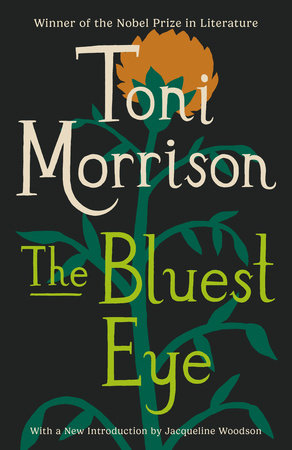
The Bluest Eye
QUICK VIEW

Of Mice and Men
QUICK VIEW

Beloved
QUICK VIEW

Never Let Me Go
Praise
A New York Times Notable Book • A Time Magazine “Best Comix of the Year” • A San Francisco Chronicle and Los Angeles Times Best Seller
“Delectable. . . Dances with drama and insouciant wit.” –The New York Times Book Review
“A stunning graphic memoir hailed as a wholly original achievement in the form. There’s still a startling freshness to the book. It won’t age. In inky shadows and simple, expressive lines—reminiscent of Ludwig Bemelmans’s “Madeline”—Satrapi evokes herself and her schoolmates coming of age in a world of protests and disappearances . . . A stark, shocking impact.” —Parul Sehgal, “The 50 Best Memoirs of the Past 50 Years” The New York Times
“A dazzlingly singular achievement. . . . Striking a perfect balance between the fantasies and neighborhood conspiracies of childhood and the mounting lunacy of Khomeini’s reign, she’s like the Persian love child of Spiegelman and Lynda Barry.” –Salon
“A brilliant and unusual graphic memoir. . . . [Told] in a guileless voice . . . accompanied by a series of black-and-white drawings that dramatically illustrate how a repressive regime deforms ordinary lives.”–Vogue
“Odds are, you’ll be too busy being entertained to realize how much you’ve learned until you turn the last page.”–Elle.com
“[A] self-portrait of the artist as a young girl, rendered in graceful black-and-white comics that apply a childlike sensibility to the bleak lowlights of recent Iranian history. . . . [Her] style is powerful; it persuasively communicates confusion and horror through the eyes of a precocious preteen.” –Village Voice
“This is an excellent comic book, that deserves a place with Joe Sacco and even Art Spiegelman. In her bold black and white panels, Satrapi eloquently reasserts the moral bankruptcy of all political dogma and religious conformity; how it bullies, how it murders, and how it may always be ridiculed by individual rebellions of the spirit and the intellect.” –Zadie Smith, author of The Autograph Man and White Teeth
“You’ve never seen anything like Persepolis—the intimacy of a memoir, the irresistability of a comic book, and the political depth of a the conflict between fundamentalism and democracy. Marjane Satrapi may have given us a new genre.” —Gloria Steinem
“I grew up reading the Mexican comics of Gabriel Vargas, graduated to the political teachings of Rius, fell under the spell of Linda Barry, Art Spiegelman, and now I am a fan of Marjane Satrapi. Her stories thrummed in my heart for days. Persepolis is part history book, part Scheherazade, astonishing as only true stories can be. I learned much about the history of Iran, but more importantly, it gave me hope for humanity in these unkind times.” —Sandra Cisneros, author of The House on Mango Street and Caramelo
“I thought [Persepolis] was a superb piece of work, not only for the child’s eye view—the developing child’s eye view—of a society unknown to many of us in the west, and feared and suspected in proportion to being unknown…. Satrap has found a way of depicting human beings that is both simple and immediately comprehensible, AND is almost infinitely flexible. Anyone who’s tried to draw a simplified version of a human face knows how immensely difficult it is not only to give the faces a range of expression, but also to maintain identities from one frame to the next. It’s an enormous technical accomplishment.” —Philip Pullman, author of The Golden Compass, The Subtle Knife, and The Amber Spyglass.
“I cannot praise enough Marjane Satrapi’s moving account of growing up as a spirited young girl in revolutionary and war-time Iran. Persepolis is disarming and often humorous but ultimately it is shattering.” —Joe Sacco, author of Palestine and Safe Area Gorazde
“This witty, moving and illuminating book demonstrates graphically why the future of Iran lies with neither the clerics nor the American Empire.” —Tariq Ali, Author of The Clash of Fundamentalisms: Crusades, Jihads and Modernity
“I found the work immensely moving with depths of nuance and wisdom that one might never expect to find in a comic book. It’s a powerful, mysterious, enchanting story that manages to reflect a great swath of Iranian contemporary history within the sensitive, intimate tale of a young girl’s coming-of-age. I didn’t want it to end!” —Diana Abu-Jaber, Author of Crescent and Arabian Jazz
“A rare and chilling memoir that offers every reader a personal, honest portrait of Iran’s recent political and cultural history. Ms. Satrapi’s provocative, graphic narrative of life in Iran before and after the Islamic revolution is an extraordinary testament to the level of human suffering experienced by Iranians tossed from one political hypocrisy to another. Aside from the humanistic dimension, the beautifully minimalist Persepolis gives further evidence of Marjane Satrapi’s sensitivity and superb skill as an artist.” —Shirin Neshat, visual artist/filmmaker
“Readers who have always wanted to look beyond political headlines and CNN’s cliches should plunge into this unique illustrated story. Let Marji be your trusted companion, follow her into the warmth of a Persian home and out along Tehran’s turbulent streets during those heady days of revolution. Persepolis opens a rare door to understanding of events that still haunt America, while shining a bright light on the personal humanity and humor so much alive in Iranian families today.” —Terence Ward, author of Searching for Hassan
“Blending the historical with the personal is not an easy task, to blend the individual with the universal is even more challenging. But Marjane Satrapi has succeeded brilliantly. This graphic novel is a reminder of the human spirit that fights oppression and death, it is a witness to something true and lasting which is more affective than hundreds of news broadcasts.” —Hanan al-Shaykh, author of Women of Sand and Myrhh
Awards
Alex Award – YALSA WINNER 2004
Booklist Editor’s Choice for Young Adults WINNER
New York Public Library Books for the Teen Age WINNER
School Library Journal Adult Books for Young Adults WINNER
YALSA Best Books for Young Adults WINNER
21 Books You’ve Been Meaning to Read
Buy Now


Just for joining you’ll get personalized recommendations on your dashboard daily and features only for members.
Find Out More Join Now Sign In