Author Q&A
A Q&A with author Michelle Richmond
You are having tea or coffee with one of your favorite authors. Who is it, and what would you ask that author if you only got to ask him/her one question?
I would ask Chekhov how he managed to get the ending precisely right, every time. Or I would ask Grace Paley, who may have had the best ear for dialogue of any American writer working in the last half-century, how she managed to make the voices on the page sound so real and smart and biting, while at the same time creating incredibly sympathetic characters.
What’s the most surprising thing you’ve discovered about having a book published?
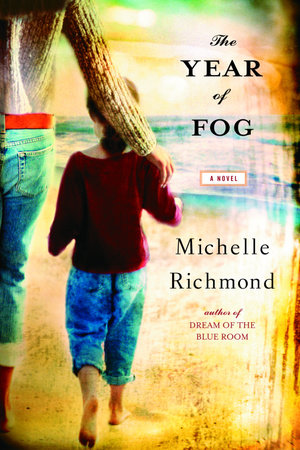
Emails come from parts unknown with the most fascinating information, the most surprising connections. A photographer and sea captain wrote to tell me that he had read The Year of Fog while out at sea, and that, upon returning to the Bay Area, he had embarked on a photo tour of the places that appear in The Year of Fog. (You can view the photos by visiting my website, www.michellerichmond.com.)
What’s your typical writing day like? And what environment is most conducive to your process?
The environment in which I work best is an almost ascetic one—very quiet, no outside distractions. I primarily work at home, and although I do have a window overlooking the street in my home office, it’s a fairly quiet street “out in the avenues,” as we say in San Francisco. In fact, I live in the area of the city that used to be referred to as the Outside Lands, an area which figures prominently in The Year of Fog.
For me, good coffee is a prerequisite for writing. On the days when I teach (in the MFA program in writing at a local college), I don’t write at all. On the days when I write, I try to completely forget about teaching so that I can focus on my own work. After taking my son to school, I sometimes walk to the coffee shop near my house, just to remind myself that the outdoors exist and to get in a little human interaction before sitting alone in front of my computer for five hours. More often, though, I make my coffee at home; this is one of my most cherished daily rituals, involving very fresh beans which I grind myself. No milk. No sugar. Just very good, very fresh coffee.
Coffee in hand, I sit down in front of my computer. If I’m working on a novel, I usually begin by reading the chapter I was working on the previous day. I’ll tinker a bit with the previous day’s work—fine-tuning sentences, adding details—before writing new material. Several hours later I’ll emerge from the fog of writing and try to reconnect with the world again. If the writing is going well, there’s this fuzzy border zone between writing and not writing, a period when my brain is still inside the novel, even though, physically, I’m no longer at the computer and am dealing with the external details of the day.
Can you name the first book you read that inspired you in some special way? Why?
Old Hasdrubal and the Pirates, by Bethe Amos. My mother must have read this book to me hundreds of times when I was a child. It’s long out of print, but when I found out I was pregnant a few years ago, one of the first things I did was go online and find a copy. It’s a swashbuckling story with dark, dramatic watercolor illustrations and wonderfully cheeky writing: “Now old great-great grandfather Hasdrubal was about to shove off, when he heard the sound of paddled pirogues in the sultry swamp. He pushed his pirogue into high marsh grasses just before a dozen pirates with a captive maid glided into sight and landed on a shell bank.”
It was many years later that I read Madam Bovary, possibly the first novel I read as an adult that moved me as deeply as the books that were read to me as a child. At about the same time, I read Lolita for the first time. With both Flaubert and Nabokov, I was inspired by the way beautiful sentences worked in tandem with rich characters and storylines; I also loved the sense of playfulness in their work. Later, when I began writing short stories seriously, I was inspired by the prose style of Grace Paley, the beauty of ideas in novellas by Lars Gustaffson. And I will always come home to The Moviegoer, by Walker Percy, which makes an appearance in The Year of Fog: “To become aware of the possibility of a search is to be onto something. Not to be onto something is to be in despair.”
Many writing experts advise “write about what you know.” Do you agree with this? And what practical advice would you give an aspiring author?
I tend to write what I don’t know, because for me a major part of the joy of writing comes from immersing myself in a subject I know little about. While writing The Year of Fog, for example, I had a wonderful time delving into the nature of memory and into the details of surfing culture. Those, of course, are the more external aspects of the book. I think from an emotional standpoint, I do tend to write what I know. I know what it feels like for a relationship to fall apart. I know what it feels like to care deeply about someone else’s child. I was able to write about Abby’s obsession with the search because I’m no stranger to obsession.
My advice to an aspiring author? Be the quietest person at the dinner party. Listen. Observe. Tune into the way people behave, their motivations. To be a novelist, one needs empathy. Empathy comes from truly trying to understand how people feel, how they make decisions. Being a keen and quiet observer of human nature will go a lot farther toward making you a good writer than any writing class. And read, read, read.
Can you tell us about the book you are working on now?
I’m very excited about my new novel, No One You Know, which will be published by Delacorte in July. My new novel is a perfect example of writing what I don’t know. The narrator is a coffee buyer, which gave me the opportunity to spend time at a coffee roaster—pretty much my dream research. The narrator’s now-deceased sister was a math prodigy, and I spent a lot of time reading up on math—biographies of famous mathematicians, G.H. Hardy’s classic A Mathematician’s Apology, books about famous unsolved problems. Who knew that the stories behind math could be so interesting? I’ll never be the kind of person who enjoys balancing the checkbook, but thanks to No One You Know, I’ve developed a deep appreciation for the beauty of mathematics.
When you finish writing your answers to this Q&A, what will you do next?
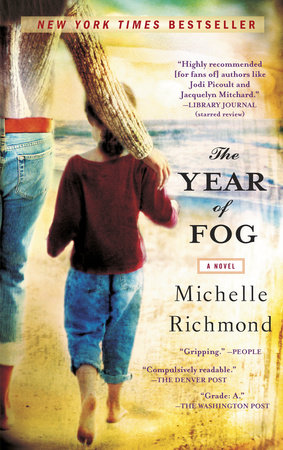
I happen to be writing this on Valentine’s Day. In a few minutes, I’ll be frosting the cupcakes for a party at my son’s school. Seriously! If you told me three years ago I’d be frosting cupcakes at 1:30 on a Thursday afternoon, I never would have believed you. As timing would have it, just minutes ago, as I was answering these questions, the UPS man arrived with a package from Bantam. I haven’t opened it, but I know what it is: the paperback version of The Year of Fog, hot off the presses. So once the cupcakes are frosted, I plan to sit down (with a cupcake of course, and coffee), open that package, and call my mother, who had the good sense to make me fall in love with books thirty-something years ago.




 QUICK VIEW