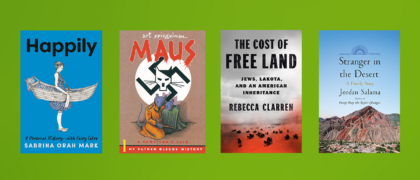
Books for Jewish American Heritage Month
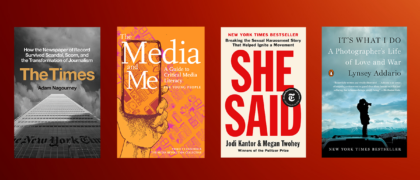
In honor of Jewish American Heritage Month in May, we are sharing books by Jewish authors who share their individual stories, experiences, and lives. Find our full collection of titles here.
Read more

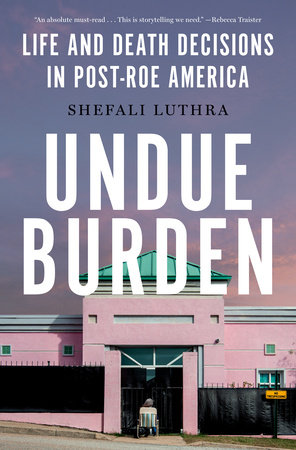
Undue Burden
Undue Burden is an urgent investigation into the experience of seeking an abortion after the fall of Roe v. Wade, and the life-threatening consequences of being denied reproductive freedom.
Learn More
Accordion Eulogies
Searching, propulsive, and deeply spiritual, Accordion Eulogies is an odyssey to repair a severed family lineage, told through the surprising history of a musical instrument.
Learn More
City Limits
City Limits is an eye-opening investigation into how our ever-expanding urban highways accelerated inequality and fractured communities—and a call for a more just, sustainable path forward.
Learn More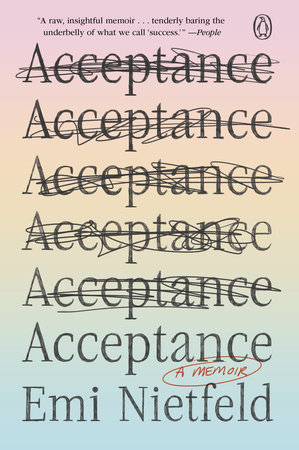
Acceptance
Acceptance is a hard-hitting and hilarious memoir of ambition, desperation, and the dark side of grit from journalist, mental health advocate, and software engineer Emi Nietfeld.
Learn More
Learn more about the issue of book banning, what Penguin Random House is doing to protect the right to read, and what you can do as an educator to get involved.
Learn More
 Next
Next
In honor of Jewish American Heritage Month in May, we are sharing books by Jewish authors who share their individual stories, experiences, and lives. Find our full collection of titles here.
Read moreFor Mental Health Awareness Month in May, we are sharing books to educate and raise awareness about mental health and the various factors that may affect it, and to provide tools and resources for student wellness. Find our full collection of titles here.
Read moreEvery May we celebrate the rich history and culture of Asian Americans, Native Hawaiians, and Pacific Islanders. Browse a curated selection of fiction and nonfiction books by AANHPI creators that we think your students will love. Find our full collection of titles for Higher Education here.
Read moreFor National Teacher Appreciation Day on May 7th, we are sharing a collection of titles about teaching, from personal stories that include advice and act as a guide for new or aspiring teachers to books about the history of education that show the struggles teachers have endured and the gains they received from persistence.
Read moreYou can search for books across this discipline through our course lists, which cover American Government and Politics, Comparative Politics, International Relations, Introduction to Political Science, Public Policy & Public Administration, and more. American Government and Politics Comparative Politics International Relations Introduction to Political Science Public Policy and Public Administration
Read moreFor World Press Freedom Day on May 3rd, we are sharing a collection of titles to promote education about the importance of freedom of the press.
Read moreIn June, we celebrate Black Music Appreciation month and the influential Black musicians and artists who have brought entertainment to their communities and beyond, and inspired others to make their own art. Collection of titles for Black Music Appreciation Month
Read more
The following titles are newly published by Penguin Random House and available for consideration.